




Video calls ‘can help in fight against dementia’
The rise of Zoom meetings and other forms of online communication during the pandemic may have played a role in helping older people in the fight against dementia, new research has revealed.
Through regularly staying in touch with family and friends online, a person can help maintain their long-term memory - adding a further benefit to the rise in virtual ways of communication, a new study has discovered. Researchers found that older people who frequently use online communication such as email and video call, alongside traditional social interactions in person or over the phone, showed less of a decline in episodic memory – the ability to recollect meaningful events and the impairment of which is a hallmark sign of major forms of dementia.
Where does rehabilitation start and end?
Defining when rehabilitation should start seems straightforward.
As soon as an individual is medically stable, evidence shows that it is beneficial for rehabilitation to begin. Starting at this earliest opportunity helps to minimise the effects of deconditioning and inactivity and reduce the risk of pressure sores and contractures. Defining the length of rehabilitation, however, and when it should ‘end’ is more tricky and continues to be subject to debate.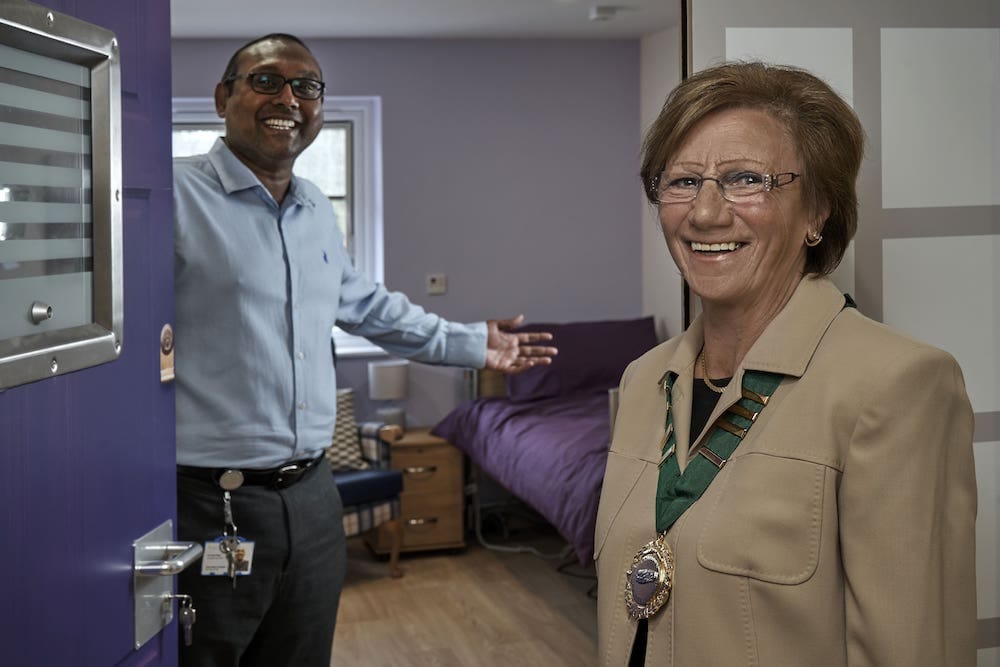
Newly-expanded hospital receives seal of approval
A hospital unit has received the official seal of approval after its recent expansion.
Carol Bryant, Chair of Langstone County Council, has been a long-time supporter of St Peter’s specialist mental health hospital and after a negative Covid test was welcomed to the site to see first-hand the new facilities on offer. The hospital, which is owned and run by specialist healthcare provider Ludlow Street Healthcare, is a person-centred assessment, treatment and care centre for men and women with degenerative neuropsychiatric conditions and Acquired Brain Injuries (ABI). The hospital has increased its capacity by 12 beds to 51 across single-gender units, which provide specialist treatment and nursing care that focuses on delivering positive outcomes for patients and their families.
Impact of VNS in stroke recovery shown in new study
A stroke rehabilitation system has been shown to significantly improve arm impairment and function in people with long-term arm weakness after ischaemic stroke.
Long-term loss of arm function after ischaemic stroke is common, and the results of the study show two to three times greater improvement with Vagus Nerve Stimulation (VNS) when it was combined with intense physical therapy, compared to intense physical therapy alone. Around 80 per cent of people with acute stroke have arm weakness, and as many as 60 per cent still having persistent problems six months later. In the study – which looked at the system developed by MicroTransponder Inc and involved 108 people in the United States and the United Kingdom with moderate to severe arm problems – trial participants were randomised to intense physical therapy paired with active VNS or intense physical therapy paired with sham VNS (control group).
‘This is a really exciting time for case management’
After five years at the helm of the UK’s professional body for brain injury and complex case management, Angela Kerr certainly has a lot to reflect on. During her tenure as chair of BABICM, the organisation has seen significant structural change, including rearrangements and introduction of new sub-groups being established, to help bring together specific talent and interest and make the decision process more efficient.


