About Deborah Johnson

This author has not yet filled in any details.
So far Deborah Johnson has created 1517 blog entries.

New cycle helmet test discovers true level of protection for cyclists

The effectiveness of bike helmets in protecting against brain injuries caused by collisions at speed has been tested for the first time. 

New helmet technologies have emerged in recent years to mitigate the instances and severity of traumatic brain injury (TBI) in collisions from cycling, but the way this is traditionally tested leaves room for doubt in their findings.  The majority of real-world cycling-based TBIs are caused by rotational forces on the brain, which are generated by the head hitting the ground at an oblique angle, mostly seen when cyclists fall or collide while moving. 
By |2024-07-04T17:43:19+01:0012 May 2021|Brain injury|

‘Don’t be alone, don’t be too proud to reach out for help’

After Vasili Kalisperas was born a healthy baby, his jaundice was left undetected by midwives and led to him being left with cerebral palsy and needing round-the-clock care. Here, his mum Elena discusses the huge mental health challenges of being a parent in such a position and how she learned to admit it’s OK not to be OK 

  I’ve always been a very optimistic and positive person, which I do think helps during such traumatic times, but that’s definitely not to say it hasn’t been a struggle. As equipped as you might be in terms of your outlook on life to deal with challenges, when something so traumatic happens to you, it is of course going to be a struggle to come to terms with that. 
By |2024-07-04T17:54:58+01:0012 May 2021|Opinion, Insight, Patient stories|

Calvert Reconnections strengthens senior team ahead of opening

A groundbreaking neurorehabilitation centre is helping to plan for its future even before its opening through strengthening its management team. 

Calvert Reconnections is set to open on June 21 and is set to deliver new possibilities in brain injury rehabilitation through its UK-first residential programme which combines traditional clinical therapies with physical outdoor activities.  The centre, based on the outskirts of Keswick in the Lake District, is now making new additions to its senior team as is prepares for its long-awaited opening, which has previously been delayed due to COVID-19. 

‘I’m a rehab professional attempting to rehab myself’

Having contracted COVID-19, which has now become Long COVID, assistant neuropsychologist Alarna continues to battle a number of effects, including fatigue. Here, she shares her reflections on her experience, which has enabled her to gain a greater understanding of her patients' wish to return to their 'normal selves'

  My name is Alarna, and I am an assistant neuropsychologist at a specialist private neuro rehab hospital. I have worked in both supported living and rehabilitation settings for the past 14 years, with various mental health conditions, psychologically rooted illnesses, degenerative diseases, and rare neurological presentations. Today in discussion with our company director responding to the question of “How are you?” I found that I had reached a new level of understanding for every patient that I had worked with. I found on some level I could identify with their journey as I am attempting to rehab myself. I answered, “I just want to get back to my normal self”.
By |2024-07-04T17:54:58+01:0012 May 2021|Opinion, Insight|

£1m dedicated to MND research through 7 in 7 Challenge

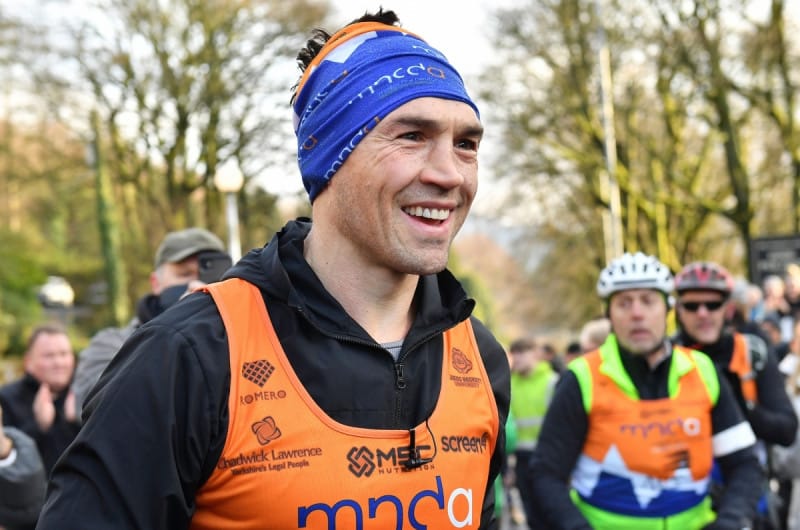
A £1million fund has been created to lead new research into potential treatments for Motor Neurone Disease (MND) through the efforts of an iconic challenge by Kevin Sinfield. 

Kevin, director of rugby at Leeds Rhinos, raised over £2million through his 7 in 7 Challenge, inspired by his former team-mate and close friend Rob Burrow.  Rhinos legend Rob was diagnosed with MND in December 2019, and Kevin completed seven marathons in as many days to help boost badly-needed research into the condition.  Now, with £500,000 of the money raised through the 7 in 7 Challenge ring fenced for research, that sum has been matched by medical research charity LifeArc. 
By |2024-07-04T17:43:19+01:0011 May 2021|Research, News, MND / ALS|

Adventures in VR for care home residents

Having fun in the snow and touching the clouds are some of the ways that residents at Exemplar Health Care’s Ribble View care home are using virtual reality technology to relax during lockdown.   The team at Ribble View, alongside experts from Rescape Innovation, have been using virtual reality (VR) technology, DR.VR, to support therapy sessions in the home in Preston.  This is part of Exemplar Health Care's commitment to investing in the latest life-enriching technology to make every day better for their people. 

Neuro tech business predicts strong growth

Advanced neuroscience and digital therapeutics business MindMaze Healthcare has revealed its plans for ‘exponential growth’ through its commercial product portfolio and clinical pipeline. 

The business is a key name in digital neurotheraputics solutions with its development of its game-based software products Rehab DTx, which supports neurorehabilitation, and Neuro DTx aimed at neurorestoration.  Its serious digital therapeutics (DTx), a combination of neuroscience and AI-powered, immersive game-based activities, are improving clinical outcomes for patients with neurological conditions including stroke, TBI, mild cognitive impairment, Alzheimer's, Parkinson's and MS. 
By |2024-07-04T17:43:19+01:0010 May 2021|Tech & industry|

Aggressive brain tumours ‘mimic brain repair processes’

Aggressive brain tumours can mimic normal brain repair processes, ‘surprising’ new research has revealed. 

Scientists at the UCL have discovered that glioblastoma, an aggressive brain cancer, mimics normal brain repair in white matter, which leads to the tumour becoming less malignant. In the study on mice, funded by Cancer Research UK, researchers used these novel findings to identify drugs which could be used, or repurposed, to harness this response and treat the cancer. Using the pre-clinical mouse models, the researchers found that Pranlukast, a drug clinically approved for treating asthma in people, suppressed glioblastoma growth. “We know glioblastoma often develops and spreads in the brain’s white matter but it has been unclear why this happens or what molecules are involved in this process,” says lead author, Professor Simona Parrinello of the UCL Cancer Institute.
By |2024-07-04T17:43:20+01:0010 May 2021|Research, News|
Go to Top