About Deborah Johnson

This author has not yet filled in any details.
So far Deborah Johnson has created 1517 blog entries.

Could a Mediterranean diet help beat dementia?

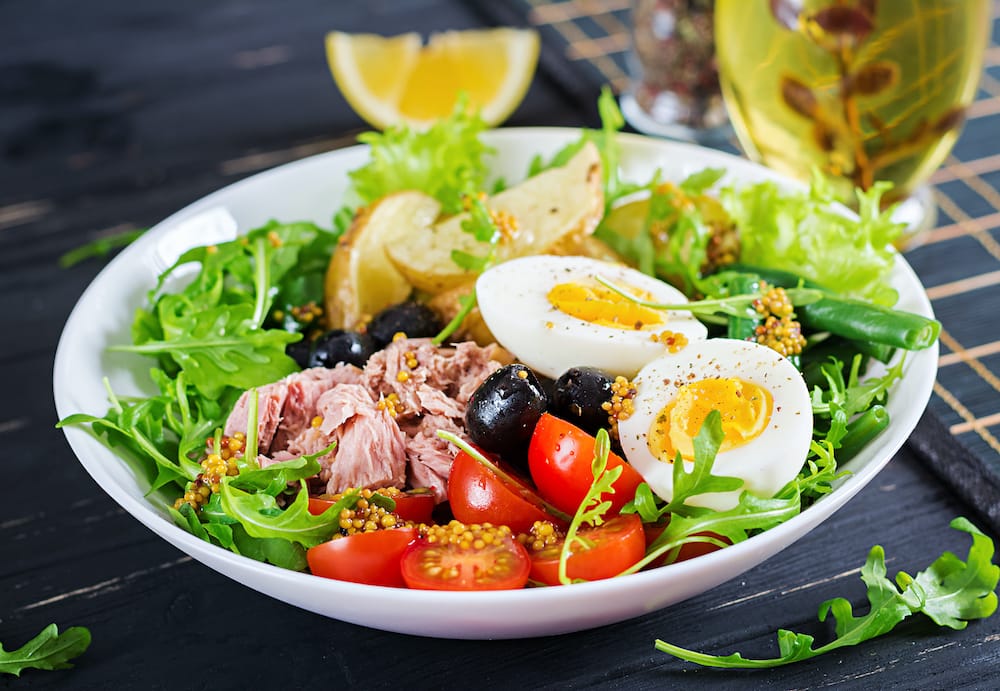
Eating a Mediterranean diet could help reduce the risk of dementia and cognitive decline, new research has found.  By following a dietary pattern with a greater intake of vegetables, fruit, cereals, fish and monounsaturated fatty acids - like that from olive oil - the risk of protein build-up and brain atrophy can be reduced.  Such a Mediterranean-led diet also has a low intake of dairy products, red meat and saturated fatty acids.  Previous research has revealed following such a diet can reduce risk of heart disease and support weight loss - but this new research from the DZNE German Centre for Neurodegenerative Diseases has revealed its efficacy in the fight against dementia. 

By |2024-07-04T17:43:20+01:0010 May 2021|Dementia|

‘We don’t want to rescue veterans – we want to support and empower them’

Help for Heroes has become known and loved throughout the UK for its central role in supporting injured service men and women rebuild their lives as they return to civilian society. NR Times speaks to its head of clinical services, Carol Betteridge, to find out more about its life-changing work.

When service men and women sustain injuries - whether physical or psychological - frequently a main supporter in their recovery is Help For Heroes.  The charity has supported more than 25,000 people to date, including those who have sustained some of the most serious, complex and life-changing injuries imaginable in conflict.  Currently, the charity is working with 21 of the most critically injured UK service personnel in supporting them to rebuild their lives as people with complex injuries in a civilian world.  And enabling them to move on with their lives is what Help For Heroes is committed to achieving, enabling access to the bespoke support and rehabilitation they need to do that. 
By |2024-07-04T17:43:20+01:007 May 2021|Community neuro rehab, News|

‘Small steps matter for reaching the stars’

Goal-setting in rehabilitation is vital, says Lisa Beaumont, whose own ongoing recovery from stroke is supported by the achievement of goals and the creation of new ones

  Success in rehabilitation requires progress that can be shown by moving towards a goal. My primary goal since my rehab journey began ten years ago has been to be able to walk without a stick.
By |2024-07-04T17:43:20+01:007 May 2021|News|

New checklist in appointing a case manager unveiled

A new checklist has been created to support legal professionals in choosing a case manager in brain injury or complex conditions cases. 

The checklist outlines a set of criteria case managers should meet in order to be appointed to such cases, and is aimed at solicitors, paralegals and deputies to help them appoint the right person for their client’s individual needs.  The initiative has been developed by BABICM as part of its ongoing commitment to set the highest standards within the sector and and further professionalise case management. 
By |2024-07-04T17:43:20+01:006 May 2021|Case management|

UFC adopts concussion protocols for MMA fighters

An official concussion protocol has been created for mixed martial arts (MMA) fighters competing in the UFC, in a first for the sport which builds further on global efforts to safeguard sportspeople from the effects of head injury. 

The UFC Performance Institute has published its protocol, aimed at both fighters and coaches, as part of a 484-page study based on data collected between 2017 and 2019.   Hailed as the most comprehensive MMA study ever undertaken, it details the UFC’s five-step rules around returning to the sport following concussion or TBI. 
By |2024-07-04T17:43:20+01:006 May 2021|Brain injury|

Why does exercise intensity matter?

Intensity is essentially the amount of work you do in a given period of time using these four components of exercise - Load, Distance, Speed and Time.

For example, with resistance training, this could be measured by how much load/weight you move, how far it is moved, how quickly it is moved and how long that weight was moved for. Using this understanding, a larger load moved more quickly will be recognised as being completed at a higher intensity than if one of those components was less. Knowing the intensity a client can work at allows you to apply overload which is where you increase intensity to permit a physiological adaptation. 
By |2024-07-04T17:43:20+01:006 May 2021|Neurophysiotherapy|

‘Game changing’ avatar trial to launch

A groundbreaking trial is to be launched today which uses digital avatars to represent the auditory hallucinations experienced by people with psychosis.

The AVATAR 2 trial uses the unique therapy to help those with psychosis increase power and control over the voices they hear and reduce their distress. The trial – led by the University of Glasgow and developed by King’s College London, UCL and UCL Business – is being launched in Glasgow with an online event which will celebrate the first full quarter of running the AVATAR2 trial in Scotland. The therapy trial is also being extended to sites across the country including University of Manchester, as well as King’s College London and University College London.The AVATAR 2 trial uses the unique therapy to help those with psychosis increase power and control over the voices they hear and reduce their distress. The trial – led by the University of Glasgow and developed by King’s College London, UCL and UCL Business – is being launched in Glasgow with an online event which will celebrate the first full quarter of running the AVATAR2 trial in Scotland. The therapy trial is also being extended to sites across the country including University of Manchester, as well as King’s College London and University College London.
By |2024-07-04T17:43:21+01:006 May 2021|Neuropsychology|

First digital health support platform for ABI launched

The first digital health intervention for families affected by ABI has been launched, with a view to national roll-out in the coming months. 

CBIT In Hand has been created to provide immediate, tailored information via a mobile device to families of children and young people who have been affected by concussion and/or acquired brain injury (ABI).  After three years of planning by the Child Brain Injury Trust, the app went live last week when it was launched at the CBIT virtual conference, and is being trialed in Alder Hey and Birmingham Children’s Hospital for the next three months.  CBIT in Hand, which can be accessed by QR code or downloaded from App stores, is being targeted at A&E departments and major trauma units, to ensure families can find the digital information, resources and support they need instantly during the most difficult early stages of their loved one’s injury. 
By |2024-07-04T17:43:21+01:005 May 2021|Tech & industry, News, Brain injury|

‘Healthcare and individuals can both tackle stroke risk’

“Stroke is a challenging, complex and difficult condition to treat and manage, and it requires both the healthcare and public to play a part in preventing, treating and managing it.”

Elizabeth Muchechetere, head of therapies (neuro rehabilitation) at neurological care centre British Home, shares her insight on a series of points around stroke and recovery, to help highlight the condition during Stroke Awareness Month.  Anyone can be affected British Home is a neurological care home with 80 residents - 34 per cent of our residents have been affected by stroke, and they all present differently, and therapy is tailored to suit presentation. 
By |2024-07-04T17:43:21+01:005 May 2021|Stroke|

‘I’ll be forever grateful’

After 88-year-old Philip Haines had a stroke and lost mobility in his left side, his bespoke rehabilitation enabled him to regain his independence. Here, to mark Stroke Awareness Month, he shares his story of recovery

  “I’ll be forever grateful.”  For 88-year-old Philip Haines, who lost mobility in his left side following a stroke, his thanks to those who helped him regain it are limitless.  Philip, former secretary to the Anglican Diocese of Peterborough, admits being “hit for six” after his stroke, which was caused by a blood clot in his brain.  His cerebral infarct left him with dense left hemiplegia, meaning he was unable to move his left arm and leg. While the blood clot was successfully removed, the stroke left Philip with cognitive challenges and difficulty in swallowing.
Go to Top