



Could machine learning predict Huntington’s progression?
Scientists are using machine learning to analyse data collected from the world’s largest study of people with Huntington's disease.
Huntington’s disease is a complex condition to treat. There is no cure and no treatments that can alter its course. Its progression is hard to predict, but a new retrospective study shows how machine learning could play an important role in predicting its trajectory. The study was conducted by scientists at the University of Iowa Health Care, US biotech company Genentech and Roche Products, the company behind the development of a potential new therapy for HD, Tominersen. Read NR Times' interview with those behind the study to find out how machine learning could change Huntington's management.
ParkinSex: The Kama Sutra of Parkinson’s
A new resource has been launched to help Parkinson’s patients reclaim the intimacy in their relationships and tackle the taboo surrounding sex and PD. NR Times talks to Dr Rebecca Gilbert, chief scientific officer of the American Parkinson Disease Association, to find out more.
Parkinson's disease affects more than ten million people worldwide and the prevalence of sexual dysfunction is disproportionately high in patients. Eighty three per cent of women and 79 per cent of men with Parkinson’s Disease report difficulty with sex and intimacy, often causing partners to grow apart physically and emotionally. Symptoms like tremor, rigidity and fatigue only reinforce this growing distance. In an effort to help Parkinson’s patients reconnect with their partners, the American Parkinson Disease Association (APDA) has partnered with Havas Health Plus to launch ParkinSex, a kit designed to help reintroduce intimacy and deepen connections for those affected by Parkinson’s. Read on to find out how the programme is challenging misconceptions about PD and a fulfilling sex life being incompatible.
Caring for dementia care-givers – a novel approach
NR Times meets Sara Masoud, programme leader of a groundbreaking dementia carers initiative that recognises the importance of culture, community and research representation.
As a teenager living in Southern Texas, Sara Masoud found herself caring for her elderly grandfather as he began to develop signs of dementia. Her family knew nothing of the condition. “We operated from a place of love and compassion, but we had no idea what dementia was,” Masoud tells NR Times. But that experience has helped to shape her current role as programme director of the Caring for the Caregivers project at the University of Texas Health Science Centre. Read on to find out how the programme is pioneering a new approach based on community engagement, understanding of cultural barriers and a mission to for research trial inclusion.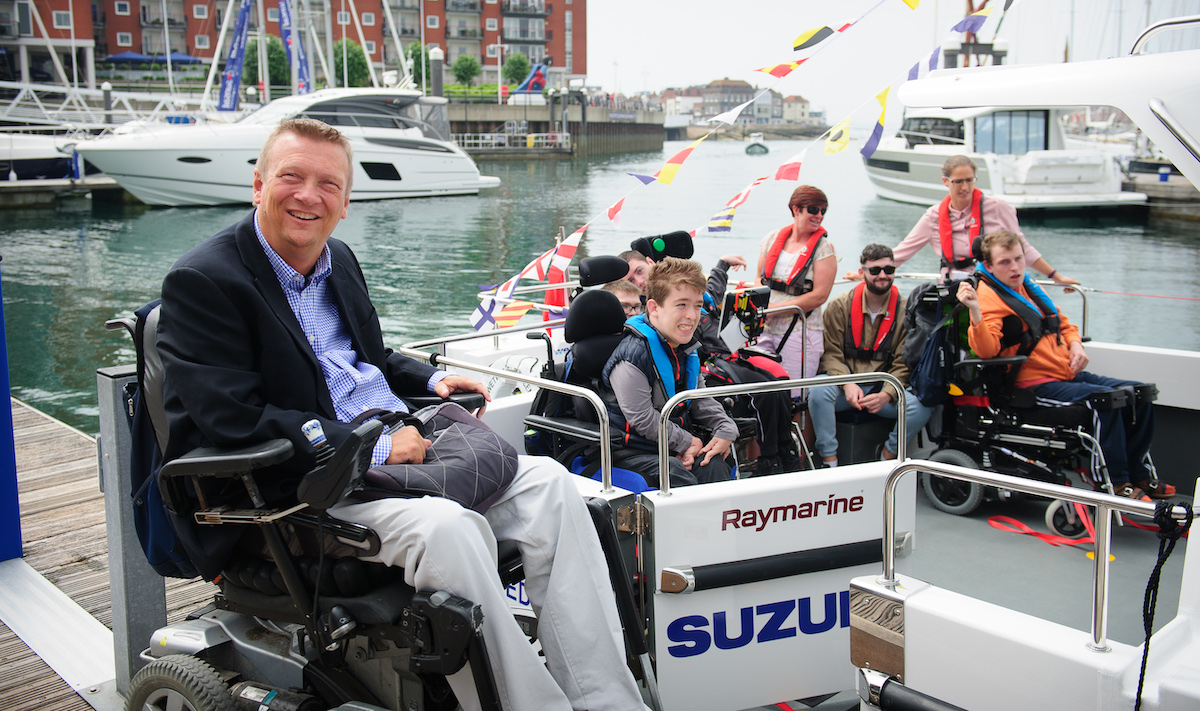
“It’s all about freedom” – the charity making the ocean accessible to all
A charity founded by the first disabled man to sail across the Atlantic is giving people with complex disability the chance to experience the open water.
Last year, 6000 disabled people, many of them living with severe neurological conditions and complex disability, were given a rare opportunity to experience the freedom of the open sea. The voyages were organised by Wetwheels Foundation, a charity founded in 2011 by disabled yachtsman Geoff Holt MBE. Holt was the first disabled person to sail around the British Isles and the first to sail across the Atlantic. He was already helping disabled people access the joys of the ocean as chairman of the Royal Yachting Association’s Sailability, a project that has allowed 20,000 disabled people to experience sailing. But there was a gap for people with more complex and severe conditions.
Crisis looms in UK spinal injury care
Lack of public health capacity is leaving many spinally injured people vulnerable through lack of overnight care, trapped in inappropriate nursing homes or forced to move away from their communities.
That is according to experts at the Spinal Injuries Association (SIA) who have shared with NR Times their concerns about the impact of public health care gaps on the UK’s spinal cord injured population.
“Rehab saved my life, now I’m committed to paying back that debt”
Dr Bruce Powell was Australia’s longest-serving state director of organ and tissue donation, an experienced anaesthetist and head of an intensive care unit before a horrific cycling accident halted his career. During his 25-year career, Dr Powell worked as a medical officer with the Royal Navy, and as a kidney specialist, intensive care doctor and anaesthetist in the Australian health system. He led a new intensive care unit in Western Australia’s Rockingham Hospital and after introducing an organ donation operation within the facility, he was asked by the Australian Government’s organ donation authority, DonateLife, to lead their work throughout Western Australia. But his impressive career would come to a dramatic end in September 2018 when he took a trip to the east coast of Australia to compete in a charity bike ride on the Great Ocean Road.

MND Condition update: “MND isn’t incurable, it’s underfunded”
Motor Neurone Disease research has long been underfunded, but the [...]

Q-Collar: does novel device really prevent brain injury in sport?
While some regard the FDA-authorised Q-Collar as a revolutionary brain injury prevention tool for athletes, some scientists are sceptical about its true efficacy. NR Times reports. A growing number of professional athletes, mostly American football players, have been seen wearing a novel device around the neck. It is said to reduce the risk of head trauma in contact sports, but the device has stirred up controversy as sceptical scientists call into question the theories behind the technology. According to the Centres for Disease Control and Prevention, from 2006 to 2014, the number of TBI-related emergency department visits, hospitalisations and deaths in the US increased by 53 per cent. Over time, repeated knocks to the head - even those that do not cause a concussion - can lead to a serious condition known as chronic traumatic encephalopathy (CTE).

Magic therapy: the life-changing potion for young people with hemiplegia
The power of magic is being used to help children [...]


