



Parkinson’s

Depression can appear years before a diagnosis of Parkinson’s disease or Lewy body dementia, new research has revealed, suggesting it may be an early indicator of neurological disease. A long-term study found people who later developed Parkinson’s disease or Lewy body dementia were significantly more likely to experience depression than those with other serious chronic [...]
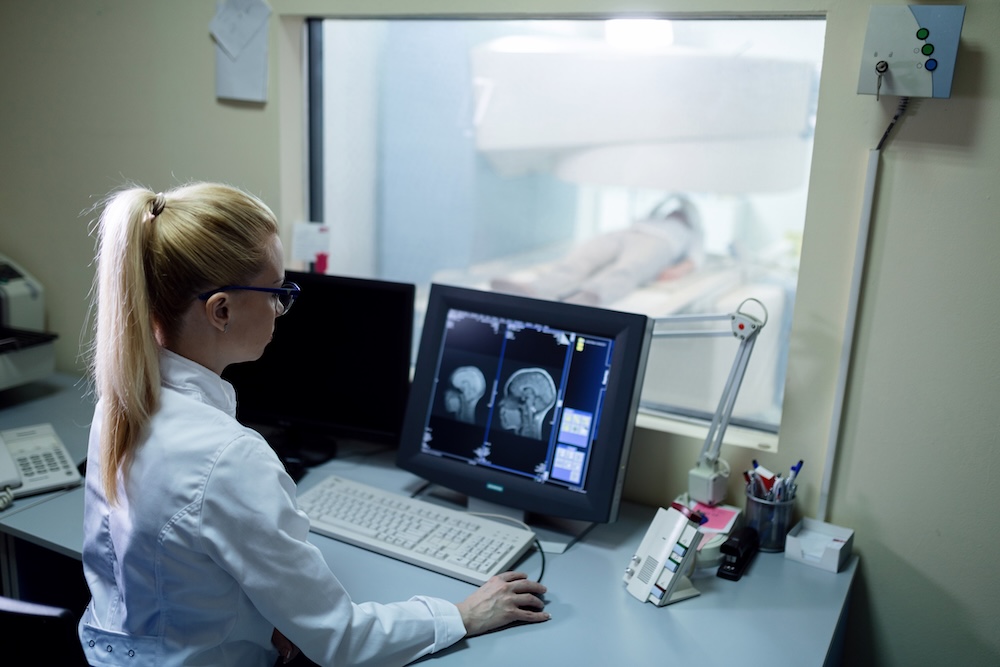
Advanced MRI analysis could improve early diagnosis of two rare conditions often mistaken for Parkinson’s disease, research suggests. The study indicates that detailed assessment of brain scan patterns can distinguish between progressive supranuclear palsy (PSP) and corticobasal degeneration (CBD), even at early stages. Both conditions are neurodegenerative diseases that cause balance problems, falls, stiffness and [...]

A clinical trial is investigating whether specialised stem cells implanted in the brain can treat Parkinson's disease. Although available treatments can help manage symptoms, there is currently no cure or therapy proven to slow the progression of the disease. The condition is associated with reduced dopamine release in the brain. Dopamine is a [...]

A new study shows how the Parkinson's protein alpha-synuclein harms brain cells by disrupting mitochondria. Abnormal clumps of alpha-synuclein can injure neurons. Mitochondria are the cell’s energy producers, and their failure starves cells of power. The work clarifies how these problems connect, pointing to a direct interaction that undermines mitochondrial function. Researchers from [...]

Newly discovered blood markers could underpin a Parkinson's blood test that flags the disease years before symptoms appear, researchers said. While there is currently no cure for the degenerative brain condition and no test to diagnose it, early detection is crucial to start treatments that may slow progression. A blood test for these markers could [...]

Hearing loss is linked to a higher risk of Parkinson's disease (PD), a new study of US veterans suggests. The research examined 7,296,051 US veterans who had an audiogram, a hearing test that measures hearing thresholds, between 1 January 1999 and 30 December 2022. People with hearing loss had a higher risk of later developing [...]

REM sleep disorder may mark early cognitive decline and raise risk of diseases such as Parkinson's, a long-term study suggests. Researchers studied people with long-term isolated REM sleep behaviour disorder (iRBD), a condition where sleepers act out dreams, often screaming, laughing or making violent movements. The term "isolated" means no other neurological disease. They found [...]

Researchers have discovered a biochemical route that could lead to new Parkinson's treatments. The findings reveal how harmful protein build-up in brain cells causes the death of movement-controlling nerve cells, a hallmark of the condition. The research was led by scientists at Case Western Reserve University. Xin Qi, the study's senior author and [...]

Long-term residential exposure to chlorpyrifos is linked to more than a 2.5-fold higher risk of Parkinson's, a study suggests. The research combines human population data with lab experiments showing how the pesticide damages dopamine-producing brain cells (neurons that make the signalling chemical dopamine), providing biological evidence for the link. Around 166,000 people in the UK [...]

Two proteins on motor neurons in the brain may drive the progression of Parkinson's, new research suggests. Parkinson's is a neurodegenerative condition in which neurons slowly die. A misfolded protein called α-synuclein builds up and spreads between cells, damaging brain tissue. A new study points to two membrane proteins, mGluR4 and NPDC1, as major players [...]


