



Research

A virus long thought to be harmless may play a role in Parkinson’s disease, new research suggests. Scientists at Northwestern Medicine detected Human Pegivirus (HPgV) in the brains and spinal fluid of people with Parkinson’s, but not in those without the condition. The virus appeared in half of the Parkinson’s brain samples examined but was [...]

Millions of Britons face a higher risk of stroke or heart failure because of air pollution, with those in the worst-affected areas 7 per cent more likely to suffer strokes. People living in the most polluted areas also faced a 27 per cent greater risk of developing heart failure compared with those in areas with [...]
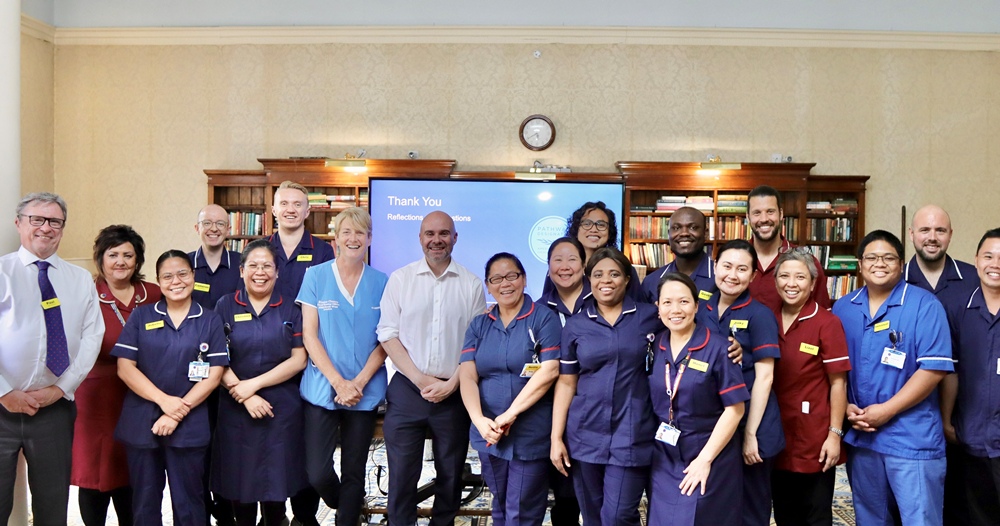
The Royal Hospital for Neuro-disability (RHN) welcomed Duncan Burton, Chief Nursing Officer for England, and Elaine Clancy, Chief Nursing Officer for South West London Integrated Care Board, as part of celebrations marking the first anniversary of the hospital’s Pathway to Excellence designation. During their visit, Duncan and Elaine met patients, families, and colleagues from across [...]

An ultrasound helmet that can target brain areas 1,000 times smaller than previous ultrasound methods may offer a non-invasive alternative to surgery for Parkinson’s disease. The device directs mechanical pulses to regions as small as a grain of rice in the brain, potentially replacing deep brain stimulation (DBS). DBS requires electrodes to be surgically implanted [...]

Two people in Toronto have become the first in Canada to receive Neuralink’s brain-computer interface implants. The procedures, carried out at University Health Network (UHN) on 27 August and 3 September, involved patients with cervical spinal cord injuries – damage to the neck that can cause paralysis in the arms and legs. Each patient received [...]

Patients with atrial fibrillation living in food deserts face more than double the risk of ischaemic stroke and nearly four times the risk of death, new research has found. Food deserts – areas where residents live more than a mile from a full-service supermarket – were linked to worse outcomes in people with irregular heart [...]

Neuro Rehab Times explores the latest developments in the world of neurology and neurorehabilitation. Gut immune system mouse model of Alzheimer’s provided new target for therapeutics The gut immune system is altered in a mouse model of Alzheimer’s, new research has found. The research shows that some immune cells in the gut travel along the [...]

Rats with completely severed spinal cords regained function after receiving 3D-printed stem cell scaffolds in a breakthrough that could pave the way for new treatments. The approach combines 3D printing, stem cell biology and lab-grown tissues to develop a potential therapy for spinal cord injuries – damage to the bundle of nerves running through the [...]
A new research initiative aims to lay the foundation for the country’s first genetic screening programme for brain aneurysms—potentially reshaping how the NHS identifies and manages a life-threatening but often overlooked condition that can devastate families for generations. The ROAR-DNA Project, a UK-based multicentre research project bringing together researchers from University Hospital Southampton NHS Foundation [...]

A study of over 75,000 people has found that moderate-to-severe traumatic brain injury (TBI) is linked with a higher risk of developing malignant brain tumours. Researchers analysed data from 2000 to 2024 and found that 0.6 per cent of patients with significant TBIs – injuries caused by external force to the brain – developed tumours [...]


