



Research

Scientists have developed 3D mini-organs from human foetal brain tissue that self-organise in vitro, presenting new possibilities for neuro research.
These lab-grown organoids open up a brand-new way of studying how the brain develops. They also offer a valuable means to study the development and treatment of diseases related to brain development, including brain tumours.
Scientists use different ways to model the biology of healthy tissue and disease in the lab. These include cell lines, laboratory animals and, since a few years, 3D mini-organs.
These so-called organoids have characteristics and a level of complexity that allows scientists to closely model the functions of an organ in the lab.
Organoids can be formed directly from cells of a tissue. Scientists can also ‘guide’ stem cells – found in embryos or in some adult tissues – to develop into the organ they aim to study.
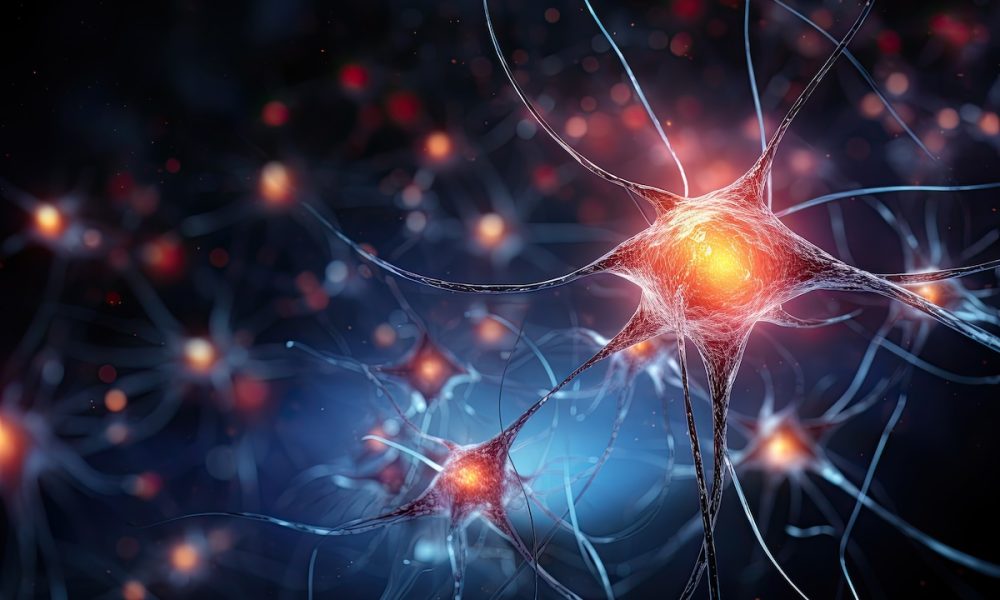
Researchers have shed new light on the causes of ALS through an investigation of a molecular anchor called VAP (vesicle-associated membrane protein-associated protein).
When experiencing new things, the structure and function of our neurons and their connections are rapidly being remodeled. This process, known as synaptic plasticity, is critical for us to learn and adapt. However, these changes require a lot of energy. Fortunately, our neurons are well-adapted to support these changes. Biological batteries known as mitochondria are strategically stabilized near sites of synaptic remodeling to ensure a local and efficient energy supply. However, how mitochondria are anchored near synapses was not known. A team of scientists at Max Planck Florida Institute for Neuroscience has now identified a molecular anchor called VAP that stabilises mitochondria near synapses to support these remodeling projects. The identification of VAP as a molecular anchor has particular significance because a mutation in VAP leads to ALS (amyotrophic lateral sclerosis), a progressive motor neuroe degeneration disease. This discovery, published in Nature Communications, not only sheds light on how memories are powered but opens up new research directions into ALS pathology.
Boston University neuroscientist Dr. Steve Ramirez on his groundbreaking research into the impact of fear memories on brain function, behaviour and memory.
Boston University neuroscientist Dr. Steve Ramirez and collaborators recently published their findings on the intricate relationship between fear memories, brain function, and behavioral responses. Their work sheds new light on the physical manifestation of memory in the brain. And, beyond implications for neuroscience, it marks significant strides in understanding memory formation and holds promise for advancing our comprehension of various behavioural responses in different situations, with potential applications in the realm of mental health. Here Dr. Ramirez discusses the motivations, challenges, and key findings of the study.Scientists are shedding light on the concept of neuroplasticity - a phenomenon that allows the brain to restructure itself after injury such as a TBI or stroke. Neuroplasticity is integral to recovery outcomes in brain injury rehabilitation and encompasses two critical aspects: synaptic plasticity and structural plasticity. In this article find out about: The groundbreaking findings on neuroplasticity The relevance of tech-enabled rehab Behavioural compensation's role in neuro-rehab

US scientists are delving deeper into the role of a specific form of cholesterol known as very-low-density lipoprotein (VLDL) in various conditions including stroke. The journey to uncover the influence of cholesterol in cardiovascular health traces back to the pioneering work of François Poulletier de la Salle, who, in 1769, successfully isolated cholesterol from a [...]
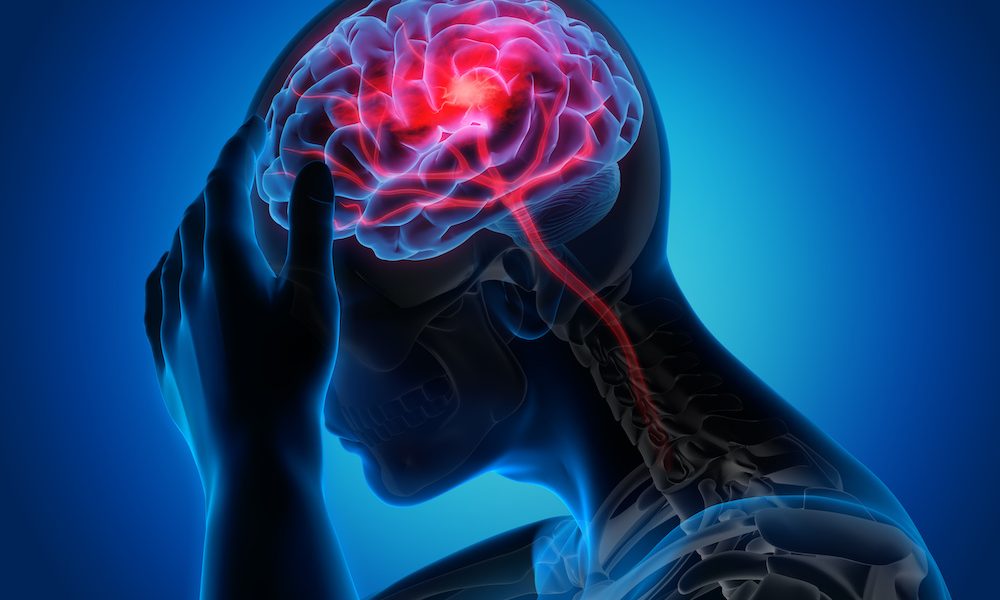
Optical-resolution photoacoustic microscopy is an up-and-coming biomedical imaging technique for studying a broad range of diseases, such as cancer, diabetes and stroke. But its insufficient sensitivity has been a longstanding obstacle for its wider application. Recently, a research team from City University of Hong Kong (CityU) developed a multi-spectral, super-low-dose photoacoustic microscopy system with a [...]

New research claims that those living with atrial fibrillation in the UK are 50 per cent less likely to die from a heart attack or stroke than they were at the start of the millennium. By analysing the health records of over 70,000 patients newly diagnosed with atrial fibrillation (AF), this research showed that mortality [...]

Researchers at UK based university has developed a new way of identifying patients at risk of an irregular heartbeat, a leading cause of stroke, known as ‘atrial fibrillation’. While not life threatening, the condition increases people’s risk of having a transient ischaemic attack (TIA) or stroke by up to five times. This new study, from [...]
Taking a daily aspirin has been showed to help prevent a second stroke for those who have already suffered a stroke, yet fewer than half of people worldwide who have had a stroke take the medication, according to a new study. Cardiovascular disease, including heart attack and stroke, is the leading cause of death globally. [...]
A new study has revealed hours of inactivity during childhood could be setting the stage for heart attacks and strokes later in life, according to research presented. The study found that sedentary time accumulated from childhood to young adulthood was associated with heart damage – even in those with normal weight and blood pressure. Study [...]


