



Stroke

A pioneering telerehabilitation initiative which enabled people recovering from acquired brain injury to continue their therapies during the pandemic has reported significant progress for participants during the programme.
The evaluation of Neuro-Rehabilitation OnLine (N-ROL) and the fact participants “significantly improved on the two planned quantitative outcome measures” provides further academic analysis to support the hugely positive anecdotal evidence about the impact of telerehabilitation, which has grown exponentially in its use during the past year.
Training stroke survivors to walk at a faster speed during recovery can help improve the brain function that enables people to walk and perform another task simultaneously, known as dual-task walking.
One common effect of stroke is that survivors often struggle to walk and do tasks that involve thinking at the same time, such as walking and holding a conversation, or planning what to do next. To be able to effectively walk in the community, cognitive effort is needed to navigate safely and deal with distractions, and many people fail to regain this ability after a stroke. However, through new research led by by academics at Oxford Brookes University and funded by the Stroke Association, the impact of faster walking during recovery has been discovered.
A new risk calculator will better predict people at high risk of stroke or heart attack years before they strike and is ready for use across the UK and Europe, it has been announced.
The risk calculator, SCORE2, will be adopted by the upcoming European Guidelines on Cardiovascular Disease Prevention in Clinical Practice, and enables doctors across Europe in the next ten years with greater accuracy than ever before. The research team behind the breakthrough say this new prediction tool will help save many more people across Europe from having a potentially deadly heart attack or stroke, ultimately saving lives. People who are flagged as having an increased risk can be put on personalised preventative treatment, such a statins, or will receive lifestyle advice to lower their risk.
Medication which targets white blood cells and stabilises atherosclerotic plaques could be used to help prevent strokes, new research has revealed.
By ‘re-programming’ white blood cells, the ability to switch them from a pro-inflammatory to an anti-inflammatory state has been discovered. Pro-inflammatory white blood cells are known to make atherosclerotic plaques unstable, making them more likely to rupture and block blood flow to the brain. When the University of Sheffield research team took a type of white blood cell known as macrophages from human blood samples and treated them with a common anti-inflammatory drug for 24 hours, they found that the macrophages themselves became anti-inflammatory. Unveiling their findings yesterday at the British Cardiovascular Society conference, the anti-inflammatory macrophages were also less able to bind to and ingest harmful oxidised LDL (OxLDL), known to play a major role in atherosclerosis and present in high quantities in plaques most likely to lead to a stroke.
People with COVID-19 have more severe strokes, with the potential to strike at a younger age, new research has found.
The COVID-19 Stroke Study Group's latest report shows that nearly 45 per cent of strokes among people with the virus are large vessel occlusion (LVO) - in the general population, this is between 24 to 28 per cent. It also found that more than a third of people in the group were younger than 55, and nearly half were younger than 65. Pre-pandemic general population data showed 13 per cent of strokes occurred in people under 55, and 21 per cent in people younger than 65. The report focused on a group of 432 patients from 17 countries diagnosed with COVID-19 and stroke.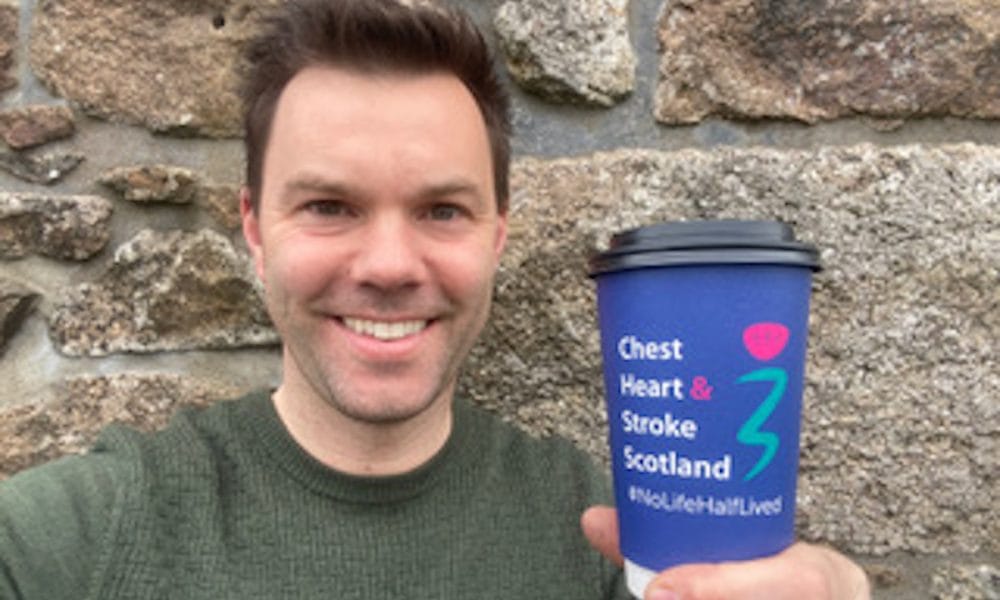
Chest Heart & Stroke Scotland is a charity designed to help victims of these conditions.
It is currently running a campaign called #NoLifeHalfLived, which is particularly applicable to Symposium Coffee founder Paul Haggath. He has been using his love for a brew to help run his Peterhead-based company since 2005. In December 2018 he was hosting some family members for the weekend where they would be visiting one of his stores for breakfast. He had been feeling particularly under the weather in the weeks previous to this, resulting in numerous trips to see his GP.
A new £1m state-of-the-art rehabilitation unit in North East England has opened to help boost the chances of recovery for stroke patients.
The Jubilee Acute Stroke Rehabilitation Unit at the Queen Elizabeth Hospital in Gateshead has been specifically designed for the needs of stroke patients, and will provide active rehabilitation to support such people. Patients will be encouraged to engage in activities and exercises designed to promote recovery and independence, including daily self-care tasks, walking, making drinks and breakfast, social activities, and communication and cognitive tasks – all of which are known to enhance the odds of recovery after stroke.
Stroke survivors have improved their ability to communicate and use their non-dominant hands through a new initiative in which artwork was inspired through sound.
The Seeing Sound project brought together people with aphasia, a language impairment caused by damage to the left side of the brain, usually as a result of a stroke. Over five sessions between November 2020 and February 2021, the 17 participants - service users of London charity the Free Space Project and Liverpool-based The Brain Charity - created dozens of artworks in response to sounds. The clips, released as part of the British Library’s Unlocking Our Sound Heritage project, included the songs of chaffinches and tawny owls, streams running through woodland, the babble of seaside piers and even the mating call of a male haddock.
A stroke rehabilitation system has been shown to significantly improve arm impairment and function in people with long-term arm weakness after ischaemic stroke.
Long-term loss of arm function after ischaemic stroke is common, and the results of the study show two to three times greater improvement with Vagus Nerve Stimulation (VNS) when it was combined with intense physical therapy, compared to intense physical therapy alone. Around 80 per cent of people with acute stroke have arm weakness, and as many as 60 per cent still having persistent problems six months later. In the study – which looked at the system developed by MicroTransponder Inc and involved 108 people in the United States and the United Kingdom with moderate to severe arm problems – trial participants were randomised to intense physical therapy paired with active VNS or intense physical therapy paired with sham VNS (control group).
“Stroke is a challenging, complex and difficult condition to treat and manage, and it requires both the healthcare and public to play a part in preventing, treating and managing it.”
Elizabeth Muchechetere, head of therapies (neuro rehabilitation) at neurological care centre British Home, shares her insight on a series of points around stroke and recovery, to help highlight the condition during Stroke Awareness Month. Anyone can be affected British Home is a neurological care home with 80 residents - 34 per cent of our residents have been affected by stroke, and they all present differently, and therapy is tailored to suit presentation.


