


Tech & industry

A company pioneering AI-led cognitive assessment has taken its first step into the US and Canadian healthcare markets.

AI can be used to give stroke patients a personalised and more accurate risk for suffering a recurrence, a study suggests. Experts believe the study will help to identify the most important factors for preventing stroke recurrence and has the potential to help prevent many thousands of strokes a year in Europe, and in doing [...]
Study highlights possible link between sedate leisure activities and heightened stroke risk.

A mother and son team who have devised a pioneering standing wheelchair are looking to partner with a manufacturer to bring their prototype to fruition.
The Walking Wheelchair enables people with limited use of their legs to assume a standing position, using a saddle therapy seat and Segway-style wheelbase. Its design, which is aimed at people living with conditions including Muscular Sclerosis, Cerebral Palsy, Motor Neurone Disease and spinal injury (L1-5), is protected by patent and has already won awards for its innovative design. It differs from what is already available through its saddle seat lifting the user’s weight vertically to standing, rather than a conventional seat which tips, and has a gyroscope to balance the standing weight instead of a counterweight. It also has a two wheel wheelbase with a tight turning circle rather than the standard six-wheel base.
Could extra body weight impact the brain? New research sheds new light on the topic.

New tech backed by £1.2m in funding could be a potential game-changer.

Through the creation of BelongMS, people living with Multiple Sclerosis around the world are being supported in new and innovative ways. Its co-founder and CEO, Eliran Malki, shares the reasons for its foundation and the impact it is delivering
People who live with a chronic medical condition are often faced with a difficult choice: succumb to the condition or be proactive in managing it. Evidence shows that where sufferers are actively engaged, they maintain better mental health, which in turn has a positive effect on their physical health. The challenge is knowing where to turn to get the support that is best suited to their unique condition.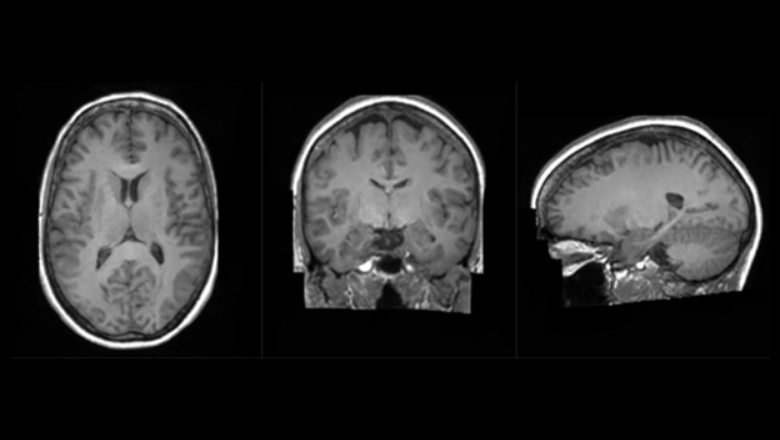
Securing new levels of insight into the human brain through AI-led 3D image creation is one of the first projects to be pioneered by the UK’s recently-launched most powerful supercomputer.
The Synthetic Brain Project focuses on building deep learning models that can synthesise artificial 3D MRI images of human brains. These models can help scientists understand what a human brain looks like across a variety of ages, genders, and diseases. The aim of developing the AI models, using the Cambridge-1 supercomputer, is to help diagnose neurological diseases based on brain MRI scans, but it may also be used to predict diseases that a brain may develop over time and enable preventative treatment. The use of synthetic data has the additional benefit that it can ensure patient privacy since the images were generated, enabling the research to be opened up to the wider UK healthcare community.
A new VR platform for brain injury rehabilitation has been created by a team of medical professionals, whose commitment to the use of technology in rehab is helping to advance thinking in the area nationally.
Brain Recovery Zone provides the resources for brain injury survivors to support their own recovery from an early stage, and increase their capability to manage fatigue, improve speech and mood and stabilise their emotions from their own home. The platform offers a safe virtual space for people to practice the habits that aid recovery in an immersive environment, of which there are 11 to choose from, ranging from the Northern Lights to the Hundred Acre Wood of Winnie the Pooh fame. Mindfulness and meditation experiences are also offered.
Rehabilitation robotics unicorn Fourier Intelligence is set to take its ongoing global expansion to the next level after securing funding from Saudi Aramco, becoming the first rehab tech company in the world to gain financial backing from a major player in the international investment market.
Fourier is now targeting global market expansion - with the United States and EU being key targets for the near future - ongoing development of its world-leading technology, and adding further to its international team through the C+ financing round, which the company’s co-founder Zen Koh described as being of “humongous” significance. The business, a pioneer in the global rehab tech market, is already on an unrelenting path of growth, expanding into 54 countries to date from its native Singapore, including the UK, with more than 1,000 uses of its technology in 30 of them.


