


Tech & industry
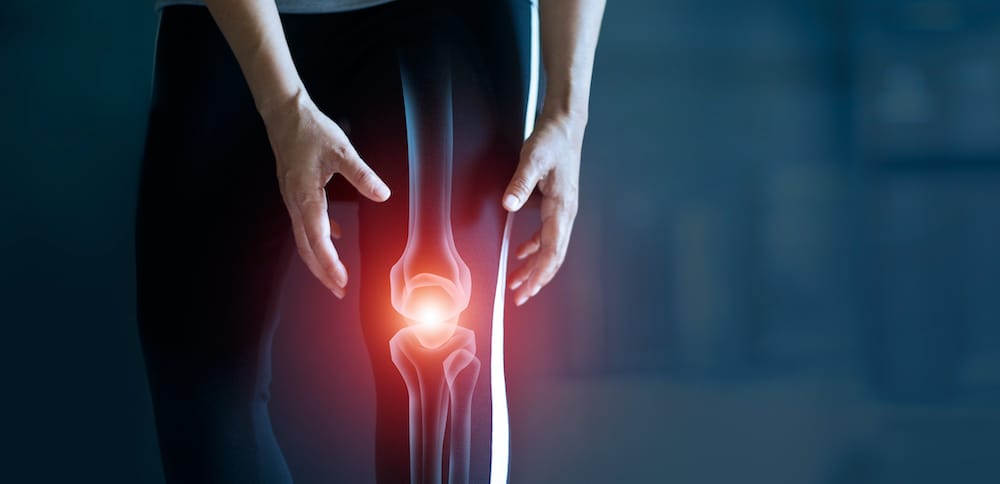
 Sponsored feature Why is Cartilage Important? Bones that come in contact with other bones are covered by cartilage at their contact points. Cartilage does not have blood vessels – it is supplied with nutrients through movement of the joint. That’s why regular exercise is so important!
Cartilage ensures that the joint surfaces move against each other in the most efficient way and with little friction. It absorbs shock, cushioning the joint, and distributes the forces acting on the joint.
If cartilage is damaged and its gliding properties are affected, it can no longer serve its purpose and the joints range of movement can become limited.
Sponsored feature Why is Cartilage Important? Bones that come in contact with other bones are covered by cartilage at their contact points. Cartilage does not have blood vessels – it is supplied with nutrients through movement of the joint. That’s why regular exercise is so important!
Cartilage ensures that the joint surfaces move against each other in the most efficient way and with little friction. It absorbs shock, cushioning the joint, and distributes the forces acting on the joint.
If cartilage is damaged and its gliding properties are affected, it can no longer serve its purpose and the joints range of movement can become limited.
Technology in the care system has come a long way, with the COVID-19 pandemic highlighting the need for more remote assistive technology.
Although there is no cure for degenerative diseases like dementia, utilising technology can ease the burden on both carers and patients, particularly those living on their own.
A revolutionary AI-led approach to detecting pre-dementia symptoms is to form part of a new NHS clinic dedicated to driving improvements in early-stage dementia diagnosis.
Cognetivity’s technology is to be deployed within a new remote Brain Health Clinic at South London and Maudsley (SLaM) NHS Foundation Trust. Among the first of its kind in the world, the clinic will provide in-depth subtyping of patients with mild cognitive impairment (MCI), followed by periodic, remote assessment of those who are expected to progress to Alzheimer's dementia. The Integrated Cognitive Assessment (ICA) devised by Cognetivity will play a key role in the clinic’s aim of enhancing early diagnosis of patients with Alzheimer’s disease and provide timely access to treatment. Cognetivity’s iPad-based test also supports the clinic's focus on remote medical assessment, the importance of which has been reinforced by the ongoing COVID-19 pandemic.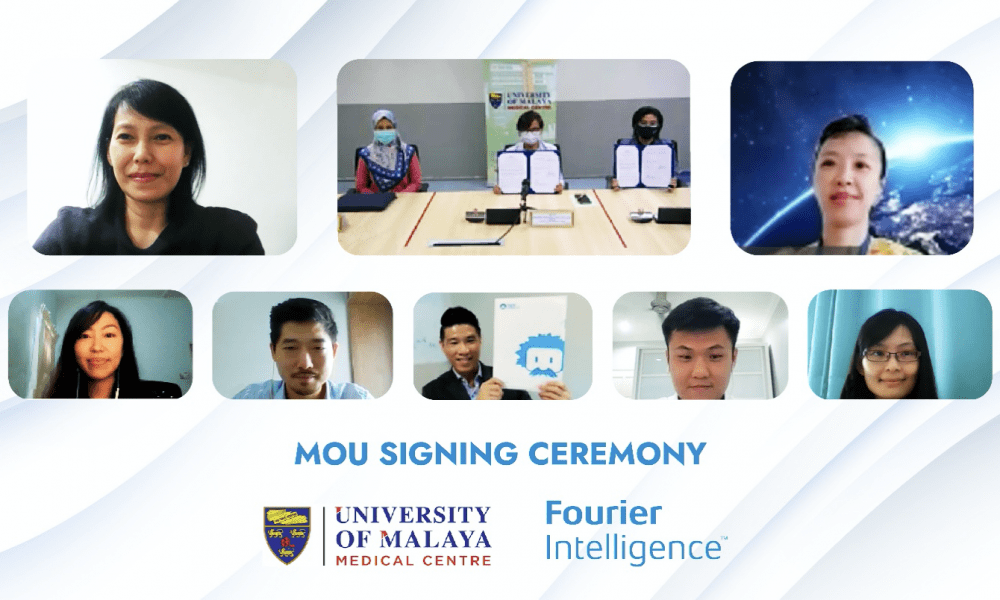
Global rehabilitation technology business Fourier Intelligence is collaborating with the internationally-recognised University Malaya Medical Centre (UMMC) in advancing research in the fast-developing field.
The collaboration, the latest pioneering research partnership to be formed by Fourier and academia, will further develop current solutions to be more effective and versatile within the rehabilitation technology industry. The MOU (Memorandum of Understanding) signing event with Fourier aligns UMMC’s mission towards driving excellence in clinical research, empowering human capital, and uplifting healthcare-related institutions. Both parties said that though this new joint effort, more innovative solutions will be developed in rehab tech.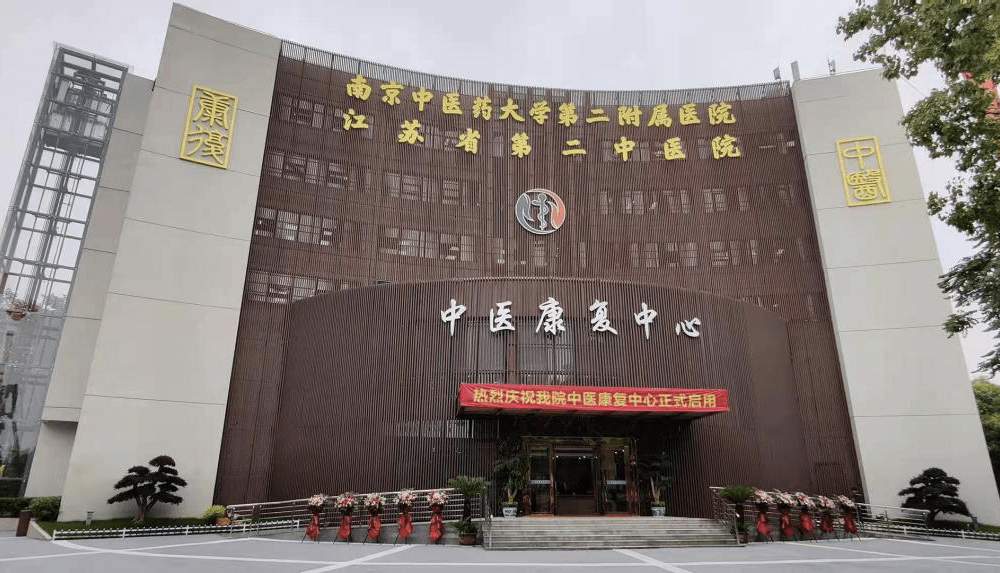
The official opening of the Chinese Medicine Rehabilitation Centre marks a historic moment in the integration of traditional and modern concepts and methods of rehabilitation therapy.
The Centre features a wide clinical application base of intelligent rehabilitation robots in collaboration with Fourier Intelligence. Traditional Chinese Medicine (TCM) rehabilitation therapy has been in practice for thousands of years and has endured the test of time. This discipline enters a new paradigm in the digital age combining advanced robotics through modern rehabilitation equipment. Established in 1988, the Second Affiliated Hospital of Nanjing University of Chinese Medicine (Jiangsu Province Second Hospital of Traditional Chinese Medicine) is a public provincial-level hospital providing medical treatment, medical education, scientific research, preventative health care, and rehabilitation.
With the creation of LusioMATE, rehabilitation is being revolutionised through the use of gaming. NR Times meets Justin Keenan, CEO of Lusio Rehab, to learn more about the world-first device
From a series of chance encounters came the creation of a business which is helping to revolutionise therapy and rehabilitation on a global scale through the use of gaming. With the creation of LusioMATE, the world’s first wearable therapy controller and game ecosystem, Lusio Rehab is helping to redraw the boundaries and rehab potential for people living with neurological conditions and other disabilities around the world. Since its launch in 2019, the device has expanded far beyond its origins in Australia to be in use in the UK, across Europe, the United States and South America.Leading UK innovation experts have outlined a new roadmap for how the country can help develop groundbreaking treatments for brain disorders through technology.
KTN is calling for a number of million of pounds to be invested into the neuro technology sector to make the UK a world leader in this industry. Those at the company have spent the last two years developing the roadmap which aims to see innovative ideas and devices brought to the market to help alleviate symptoms of conditions like Parkinson’s, stroke, depression and brain injury. Through the use of both pharmaceutical giants and start ups, the plan is aiming to accelerate new technologies to the market and scale them up to make them readily available.
With the creation of the Luscii remote monitoring platform, people with ongoing care needs can avoid the necessity for regular medical appointments, while clinicians can ensure they're being looked after from afar. NR Times speaks to its founder Professor Daan Dohmen about Luscii's role in the future of healthcare
From his early experience of working part-time in a nursing home came a realisation that patients could and should play a more active role in their care and health. “For me, that was a really important step in my vision to use technology to help regain people’s independence,” says Professor Dr Daan Dohmen. “The nursing home had all good intentions but took away the independence of people living there - they put them in the shower, they did everything.
Rehabilitation technology developed by Fourier Intelligence has won yet more recognition for its globally-significant innovation.
The ExoMotus M4, a lower limb exoskeleton, was awarded the Shanghai Design 100+ accolade. The exoskeleton, a gait and body weight system, is the first and only product of its kind on the market with its own body weight supporting system. The ExoMotus M4 will be launched into the Chinese market at the Shanghai GReAT 2021 annual summit at the end of July, and is expected to be unveiled in the international market in early 2022. The latest recognition comes only shortly after Fourier Intelligence won four awards at the China International Medical Equipment (CMEF) Spring Expo, with two being given to its newly-revamped ArmMotusTM M2 Pro device.
Eye tracking technology is proving to be a lifeline for people living with ALS, delivering vital communication assistance which helps to break isolation. Here, leading healthtech influencer and ambassador for health innovation Gil Bashe discusses the power of such intervention
The moment the flood of ice-cold water poured over my head, there was shock and silence; seconds afterward, my senses returned. I blurted out: “That’s cold!” Family nearby laughed, the moment passed, and the video of my ALS Ice Bucket Challenge was shared online. Mission accomplished, or so one might think. My state of frozen speechlessness was over in a moment, but for people diagnosed with ALS (amyotrophic lateral sclerosis also known as Lou Gehrig's disease), that state doesn’t just last for a moment. It’s an ongoing, harsh and frightening reality that makes life more difficult and can actually shorten it.


