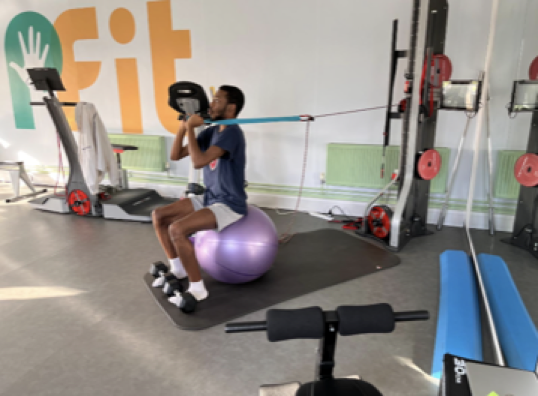
How can electrical stimulation be used to help gain a range of positive benefits for patients and be applied easily and effectively? The specialist team at PhysioFunction discuss surface electrical stimulation (SES) for NR Times
Electrical Stimulation (ES) has become a widely accepted treatment modality within Neurological rehabilitation, however therapist knowledge and expertise continue to present barriers to effective application and patient tolerance.
ES involves the application of electrical currents to the body, to either activate nerves to send sensory or motor information to the brain or muscles respectively, or to directly activate the muscles. ES can be applied either through the skin using surface electrodes, or implanted devices. For the purposes of this article, we will only consider surface electrical stimulation (SES).
When applied correctly, SES can have wide ranging and, in some cases, profound benefits to sensation, balance, muscle strength, spasticity, range of motion, exercise tolerance, hand and upper limb function, trunk stability, posture and gait function.

This article will seek to break down these barriers and help to demonstrate how SES can be applied easily and effectively.
Firstly, terminology. Acronyms such as NMES, FES, Estim, TENS are commonly seen and associated with the use of SES, of which FES is probably the most widely applied.
In a 2018 guidance document produced on behalf of the Association of Peadiatric Chartered Physiotherapists’ Neurodisability group, our physiotherapist Matthew White, together with clinical specialist physiotherapist Kirsten Hart from the National Spinal Cord Injury Centre in Stoke Mandeville Hospital categorised SES applications into sensory and motor, subdividing motor into nerve and direct muscle activation:

APCP (2020). Guidance for Paediatric Physiotherapists Working with Surface Electrical Stimulation in Neurorehabilitation. Available from: <https://apcp.csp.org.uk/publications/guidance-paediatric-physiotherapists-working-surface-electrical-stimulation>
It is evident that there are a wide range of potential ways to apply SES to generate effects within the body. The first key point to note, is that is our goal is to primarily achieve sensory effects, we need to apply a different approach to when our goal is to primarily achieve motor effects. Note primarily.
SES application falls upon a spectrum, where the quality and intensity of the current will provide different primary effects, but in most cases both motor and sensory nerves are activated to some extent, provided there is the presence of intact peripheral nerves. Direct muscle activation is different, as its goal is purely motor and does not require the presence of an intact nerve.
When considering application of SES, there are three primary parameters that can be adjusted. Frequency. Pulse duration. Amplitude.
Frequency, measured in Hertz (Hz) is the number of pulses per second. Low frequency (1-60Hz) is preferred for motor applications, producing ‘twitch’ (pulses) contractions (1-10Hz) to tetanic (sustained) contractions (20-60Hz). Higher frequencies are generally preferred for sensory applications (80-150Hz). For specific chronic pain applications (sensory), low frequencies which also produce a ‘twitch’ muscle contraction are used.
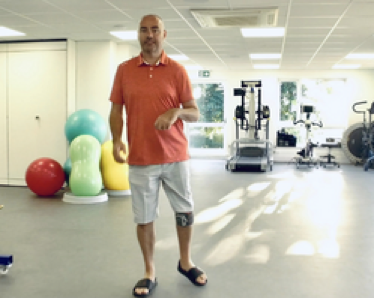 Pulse Duration, measured in micro-(µs) or milliseconds (ms) is how long each pulse remains in the body’s tissues. A millisecond is 1/1000 of 1 second, whereas a microsecond is 1/1,000,000 of 1 second. When we want to create a nerve activated response for sensory or motor effects, we work in microseconds, usually between 50 and 500µs. When we want to create a direct muscle contraction (without an intact nerve) we work in milliseconds, usually between 35 and 200ms (equivalent to 35,000-200,000 µs). Most ‘off the shelf’ TENS machines and muscle stimulators can deliver within the 50-500µs range, so if direct muscle stimulation is required, such as in the case of a low spinal cord injury or brachial plexus injury, specialist equipment is needed.
Amplitude, often referred to as ‘intensity’, is the flow of electrical current, measured in milliamps (mA). This dictates how ‘strong’ the stimulation will feel, or how powerful the muscle contraction will be. Most ‘off the shelf’ stimulators can provide 60-100mA, although they will often package this as ‘levels’ of intensity.
Manipulating these three parameters enables a therapist to effectively direct their therapy toward motor or sensory applications to gain the desired response in their client, within their level of tolerance.
Much money can be spent on clever triggers, multiple channels of stimulation, integrated exercise equipment, EMG activation and specific SES integrate garments, all of which have their place in the therapeutic environment and the home for those that need them. However, when starting out, very simple devices can provide an excellent means of introducing a client to stimulation, testing their stimulation tolerance and exploring the potential effect, before moving into more advanced and specific devices, such as FES foot drop systems.
As part of our Training with PF Education initiative and in response to the feedback we had this year we will be delivering further electrical stimulation webinars in 2023.
To register your interest please email [email protected]