



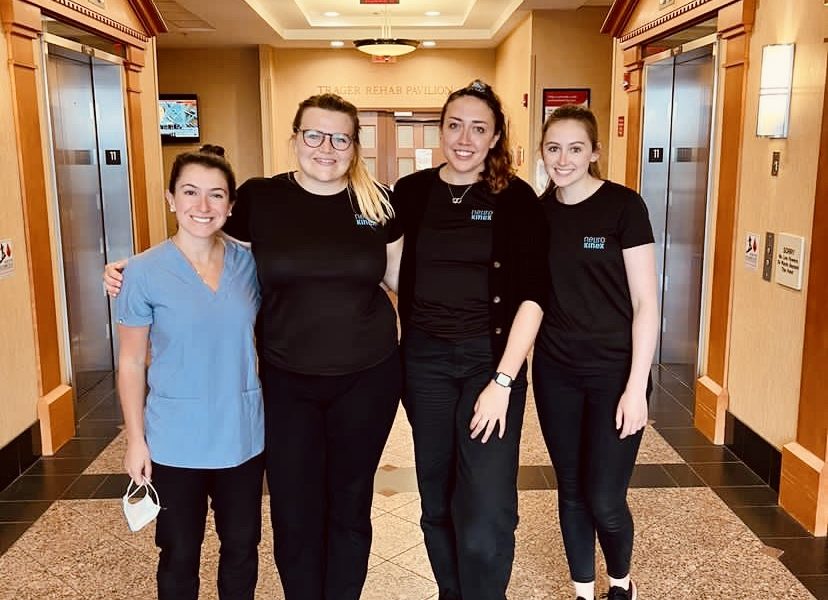
Colleagues from Neurokinex Gatwick have just returned from a trip to the US for the Paediatric NeuroRecovery Summit followed by ten days of specialist training for children living with paralysis.
This fantastic opportunity was made possible thanks to the Pamela and Wayne Garrison Family Foundation funding two places and the Crawley Co-op fundraising scheme paying for the third.
Neuro-rehabilitation trainers Lucy Church, Tamsin Fitzgerald and Rocky Addison, spent two days at the Frazier Rehabilitation Institute, hosted by Dr Andrea Behrman.
The event provided a detailed overview of the latest research in paediatric recovery including Transcutaneous spinal cord stimulation (TSCS) with industry experts covering these diverse topics:
- Karen Adolph discussing developmental psychology and why/what motivates infants to learn to walk/crawl
- Federico Canavese described the growing spine and how/when scoliosis can develop and the potentially devastating effects to lung and thoracic cage growth
- Yury Gerasimenko talked about TSCS from its beginnings in animal models and its translation to adults
- Goutam Singh and Kathryn Lucas are currently looking at using TSCS in children to explore improvements in trunk control and posture as well as initiating steps after SCI
- Kyle Brothers explored the ethics of research and how you create a paradigm shift.
The summit then closed with a parent panel where three parents of children with varying neurological diagnoses gave their experiences of the rehabilitation provided at the Frazier Rehabilitation Institute as well as bringing up a child with disabilities and the challenges they face daily.
 The Neurokinex team was invited to share their own paediatric experiences within an interactive poster session. Here they shared the stories of three of their Neurokinex Kids clients who have participated in intensive paediatric programmes and discussed the improvements that each child achieved as a result.
All three youngsters who completed the intensive programme showed improvements in core control and sitting balance which, in turn, is vital for improving independence. For example, five-year-old Betty*, completed 60 sessions of Locomotor Training (LT) and saw improvements in sitting balance as she is now able to sit independently without support from someone. Meanwhile, one-year-old Daniel* completed 80 sessions of LT and regained full trunk control in sitting and hip flexion enabling him to be able to crawl about.
All concluded that the Summit experience gave a fantastic insight into the latest research in paediatric neuro-rehabilitation and where the future may lead. Hearing from experts in their respective fields provided invaluable knowledge that can be taken and implemented into the ever-evolving practices at Neurokinex.
One early intervention being planned now is to implement the latest research on scoliosis and how to measure and prevent it. In addition, new Locomotor Training practices will be introduced to engage clients in achieving good kinematics and posture when stepping.
Alongside the practical implementations, Neurokinex will be carrying over various behavioural strategies to ensure its sessions are as therapeutically beneficial and engaging for the children as possible.
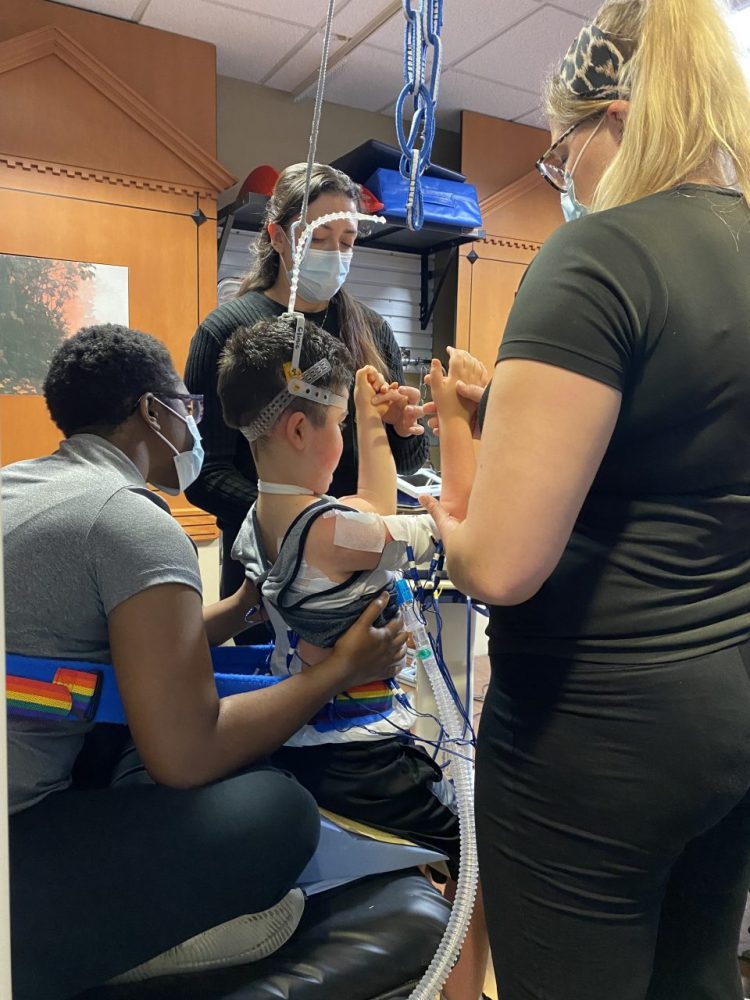
Following the summit, the Neurokinex team spent a week completing a paediatric mentorship at the Frazier Rehabilitation Institute, where they observed and participated in both physical therapy and occupational therapy sessions with children of varying ages and neurological presentations.
“We engaged in Locomotor Training and Neuromuscular Electrical Stimulation which are the two main therapies provided within the programme,” says Lucy.
“We also had the chance to observe the research studies exploring the use of TSCS in the paediatric population. At the end of each day, we had discussions with Dr Behrman and the physical therapists who answered questions, delved into the latest rehabilitation techniques and discussed how we can transfer these new skills to our practices at Neurokinex.”
“It was a really great opportunity to learn all about paediatric rehabilitation our thanks go to Dr Behrman and her team for hosting an amazing summit and mentorship,” says Tamsin.
“It was reassuring to see how aligned our exercise delivery was with the Louisville trainers’ sessions,” says Rocky. “It gave us confidence that we are working towards the same goal over a global scale and we are excited to add in our new skills to further improve our kids’ recovery journeys.”
Now back at the Neurokinex Kids centre in Gatwick, the team is putting what they learned into practice while keeping an eye on future research in this area and how it can make such a positive impact on young children’s lives.
*names changed to protect their identity


