



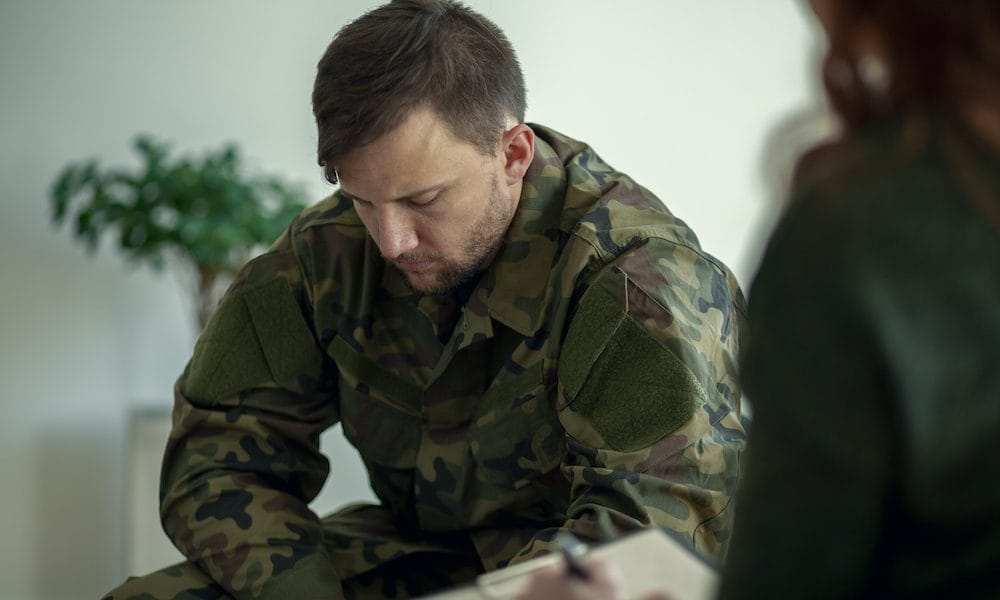
Prolonged exposure can be more effective than cognitive processing therapy in easing symptoms of post traumatic stress disorder (PTSD), a new report has found.
Both are widely-used trauma-focused cognitive behavioural psychotherapies for PTSD, but the new research concentrated on their impact within the military veteran community.
A study of more than 900 veterans with PTSD found prolonged exposure to be statistically more effective than cognitive processing therapy in easing PTSD symptoms.
But the difference was not clinically significant, with most of the veterans showing meaningful improvement from both treatments, meaning the research team would not recommend one above the other.
The two psychotherapies at the centre of the study take different approaches.
Prolonged exposure helps people with PTSD gradually approach trauma-related memories, feelings, and situations that they have been avoiding since their trauma. Patients are asked to repeatedly recall and describe out loud the details of their traumatic experience.

Cognitive processing therapy helps people with PTSD evaluate the upsetting thoughts that have existed since the trauma, with a focus on changing the way they look at themselves and the world. Therapists teach skills that help patients decide whether there are better ways to think about trauma.
In the study, 916 Veterans from 17 VA medical centres were evenly randomised to receive prolonged exposure or cognitive processing therapy. Both groups took part in 12 one-hour weekly sessions.
More than 70 per cent of the veterans in both groups reported combat exposure, just over one-third reported military sexual trauma, and more than 90 per cent had experienced a psychiatric disorder other than PTSD.
“The findings of this randomised clinical trial support VA’s strategy of promoting prolonged exposure and cognitive processing therapy and reinforce guideline recommendations for these treatments as front-line therapies,” the researchers write.
“Given that the difference in the primary outcome was not clinically significant, the lack of differences between treatments on outcomes other than PTSD, and higher attrition in prolonged exposure, we do not believe our findings support a recommendation for prolonged exposure over cognitive processing therapy.”


