Richardson Care: training the next generation of psychologists

The emphasis placed on neuro-psychological support by specialist care provider Richardson Care plays a crucial role in successful brain injury rehabilitation and supporting individuals with complex learning disabilities.
It is also a good example of how providing this support is helping to train the next generation of psychologists.
Neuro-rehab for brain injury
The invisible effects of an acquired brain injury are often longer lasting and harder to treat than any physical injuries sustained at the same time or as a result of the brain injury. Several years after a brain injury, someone may look physically much better, but they are still struggling with the emotional impact of the injury. For instance, dealing with the grief and loss of their former life, struggling with low mood, lack of purpose, low self-esteem and frustration around their cognitive difficulties, such as memory loss and communication problems.
Many of these effects are inter-related. To give a simplistic example: low mood can lead to lack of motivation or desire to engage in therapies, while improved mood and self-esteem leads to better engagement, which improves longer term outcomes. Although the road to brain injury recovery is rarely a smooth path, supporting emotional well-being helps to create a virtuous circle, aiding both mental and physical recovery.
Consequently, a holistic approach to brain injury rehabilitation, with ongoing psychological support is vital to achieve positive client outcomes.
Psychology teamwork

Pedro Areias Grilo
The psychology team is headed up by consultant clinical psychologist, Pedro Areias Grilo. He is supported by up to four assistant psychologists.
Julita Frackowska is based at two of the homes for adults with learning disabilities and complex needs. Julita has worked at Richardson Care for 17 years and provides valuable stability and continuity for the service users who are long-term residents. She completed her MA in psychology prior to joining Richardson Care.
Vanessa Coeli-Jay supports 24 service users with acquired brain injury, complex needs, learning disability or dual diagnosis. She is currently also studying for a Masters degree in psychology and neuroscience of mental health at Kings College, London.
Georgina Coppin and Rebecca Rayif are currently based at The Richardson Mews and The Coach House, supporting residents with acquired brain injury. They have completed undergraduate degrees in psychology and are gaining valuable practical experience before going onto additional studies.
The assistant psychologists deliver one-to-one and group therapy sessions for the service users, as well as providing ad hoc support. Being based at the homes and having an open-door policy means that service users can drop in at any time if they want to have a chat or need additional support.
Gaining wide experience
It is unusual for assistant psychologists who aim continue to with their qualifications to stay in a post for longer than 12 to 18 months. Because the field of psychology is so wide and varied, they need to gain experience in a range of settings. This also helps them to decide in which areas they would like to specialise.
Greg Richardson-Cheater, director of Richardson Care, says: “It could be perceived as a disadvantage to have a new assistant psychologist every 12 to 18 months but we find that it benefits the service users, and hence our organisation, as well as the employee.
“They bring fresh ideas and new insights to any situation, as well as their own hobbies and interests. Our service users all have different interests and personalities so it can be a good thing for them to get to know new people. Continuity is provided by the care staff, the homes managers,

Rebecca Rayif
Pedro and other members of the clinical team.
“The assistant psychologists work independently as well as receiving supervision from Pedro. He’s also on-hand at any time to provide support and advice, as are the homes managers.”
Greg adds: “We feel that it’s important to offer these opportunities to psychology graduates: They can see first-hand the positive impact that their work is having on our service users and they get to work with some brilliant professionals in our clinical and management team.
“Also, we want to encourage the best psychologists to stay in the field of brain injury. In the last five years, two of our previous assistant psychologists were successful at securing placements on clinical and forensic doctorate courses.”
Family support
Vanessa Coeli-Jay describes how she supported a service user and her family after she was admitted to Richardson Care.
The young lady has profound and multiple learning disabilities due to a genetic condition. Because of her level of cognitive performance, the usual array of psychological tests were not applicable, so Vanessa needed to use other parameters such as appetite, sleep, general mood and behaviours. In addition, the Adaptive Behaviour Scale was completed by proxy, via the young lady’s key worker. Vanessa conducted a clinical interview with the key worker and correlated this information with the service user’s day notes.
As the service user was unable to articulate her feelings, Vanessa had to use different techniques to paint a numerical picture, which could then be used to inform a positive behaviour support plan.
Vanessa met with the service user’s family in a review meeting and explained the detail of the psychological report. They were overwhelmed and quite emotional. Due to the complexity of their loved-one’s condition, they had never had such a comprehensive psychological report – or it had
never been properly explained to them. They felt that their loved-one had never been given so much care and attention.
Building Trust
As Georgina Coppin explains, supporting families to understand their loved-one’s diagnosis can also improve their relationship, which helps to improve the outcomes for service users.
“It’s important to build trust with family members, and we can do this by being transparent, not withholding information and being as honest as we can regarding their rehab potential. Often we can’t give a timeframe, but managing expectations is so important. We may need to interpret technical information for the families so that they understand the diagnosis and clarity is crucial,” she says.
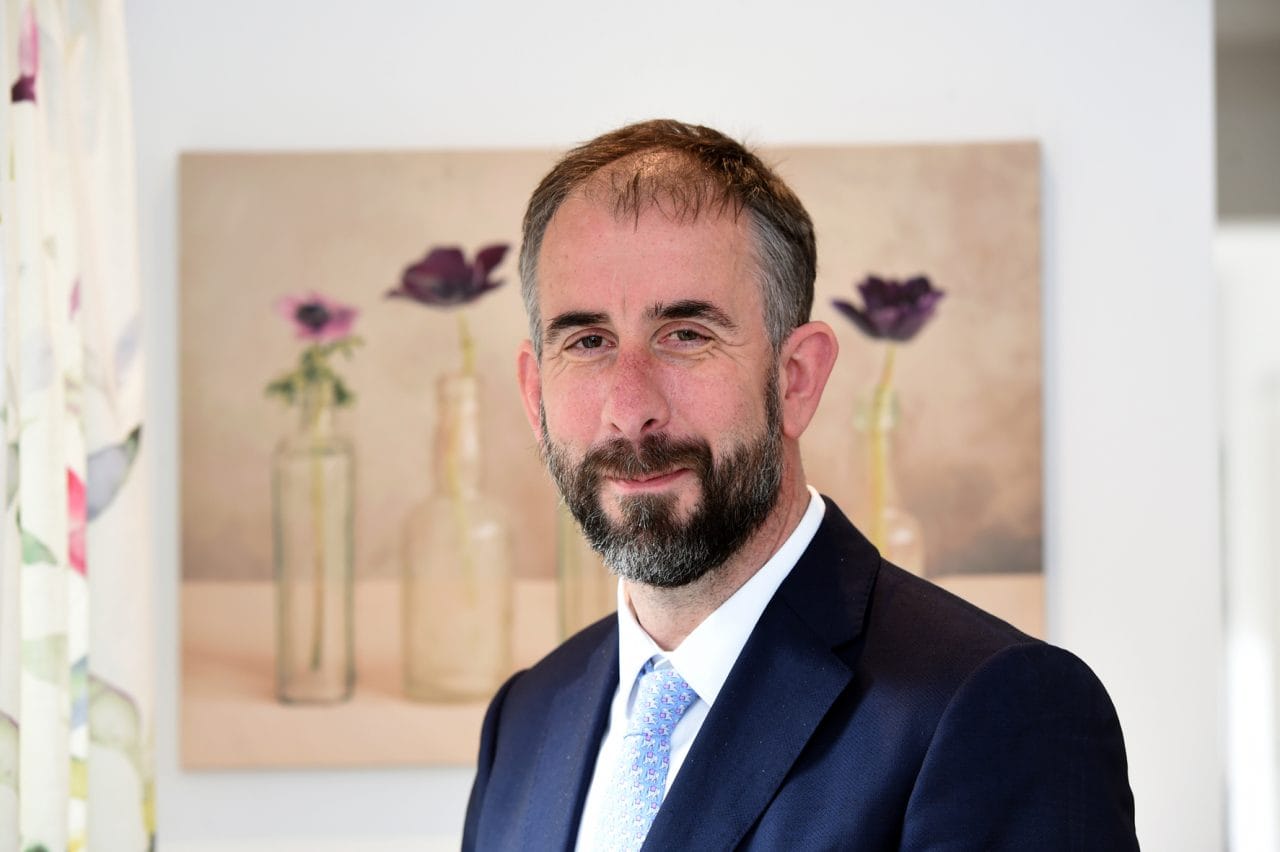
Greg Richardson-Cheater
Georgina also goes on to explain that few psychology sessions take place sitting across a desk in a therapy room: “In a residential setting like Richardson Care, which is a relaxed home environment, support can be ad hoc and less formal.
“Someone may open up to you a bit more when they’re doing another activity. I enjoy baking with the service users, so I’ll often be in the kitchen with a service user and a conversation will start from there. There are fewer barriers and you can develop a more trusting and friendly relationship, while still keeping professional boundaries.”
Georgina adds: “As assistant psychologists, we’re problem solvers. We help to find ways to support the service users but also the staff. As we spend most of our time in the homes with the service users we can contribute to the work of the care staff as well as the managers and the multi-disciplinary clinical team.”
Psychoeducation for service users
Another part of the assistant psychologist’s role is psychoeducation, supporting service users to understand their diagnosis and their emotions and to develop coping strategies. Some support sessions are one-to-one, while others involve groups.
Nikki Hives, manager of The Coach House at Richardson Care, recounts how the work of assistant psychologist Rebecca Rayif had a positive impact one everyone in the home.
“I had only been in the role for a few months and it was shortly after some of the lockdown restrictions had been lifted. All the service uses and staff were together in the lounge and Rebecca was running a mindfulness session. As I came downstairs from my office, I could see that everyone was engaged with her. Everyone was calm and relaxed. We have some service users with very complex needs and behaviours that challenge, so seeing everyone together in such a calm atmosphere was amazing. It was a real ‘wow’ moment.”
Rebecca cites an example of supporting a service user at The Coach House with psychoeducation: “This gentleman sustained a traumatic brain injury which significantly affects his memory and functional skills. He experiences frustration due to loss of skills, and his ability to manage his emotions is also impacted as a consequence of his injury, resulting in displays of behaviours that can be described as challenging.
“Memory difficulties are a perpetuating factor which can cause him distress, as he is often not able to recall the nature of his injury, nor the

Consultant neuropsychiatrist Seth Mensah
reason for being in his current placement, and therefore we might observe a decline in his mood and mental state, including heightened anger, suspicion of others and withdrawal from therapeutic interventions. Consistently offering psychoeducation to him is a particularly crucial element of his care plan.
“As this is a frequent requirement, we also work to support care staff who are with service users during all hours of the day, educating and offering guidance to them about the necessity of the intervention and how to deliver it on a day-to-day basis. We have found that working collaboratively with the care team in this way allows for sufficient and effective management of the gentleman’s presentation and support of his overall wellbeing.”
Unique environment
The unique homely environment provided by Richardson Care gives assistant psychologists an insight into what can be achieved by holistic person-centred rehabilitation with a focus on neuro-psychological support.
Georgina is now preparing to move to a new role in the prison service, working with a variety of offenders. She says: “The management team at Richardson Care has been really supportive, working closely with them at a business level has given me the confidence to work in other settings.
“Pedro has also been very helpful, especially in explaining the legal aspects of a psychologist’s role regarding capacity assessments, rights and responsibilities. I have really enjoyed my experience at Richardson Care and learnt a lot, which I can take forward into other roles.”
For more information visit www.richardsoncares.co.uk