The impact of FES-led exercise on stroke and MS patients

Experts at PhysioFunction detail the positive impact of FES-assisted exercise on people living with MS and survivors of stroke, and the progress it is possible to make in their neuro-rehab
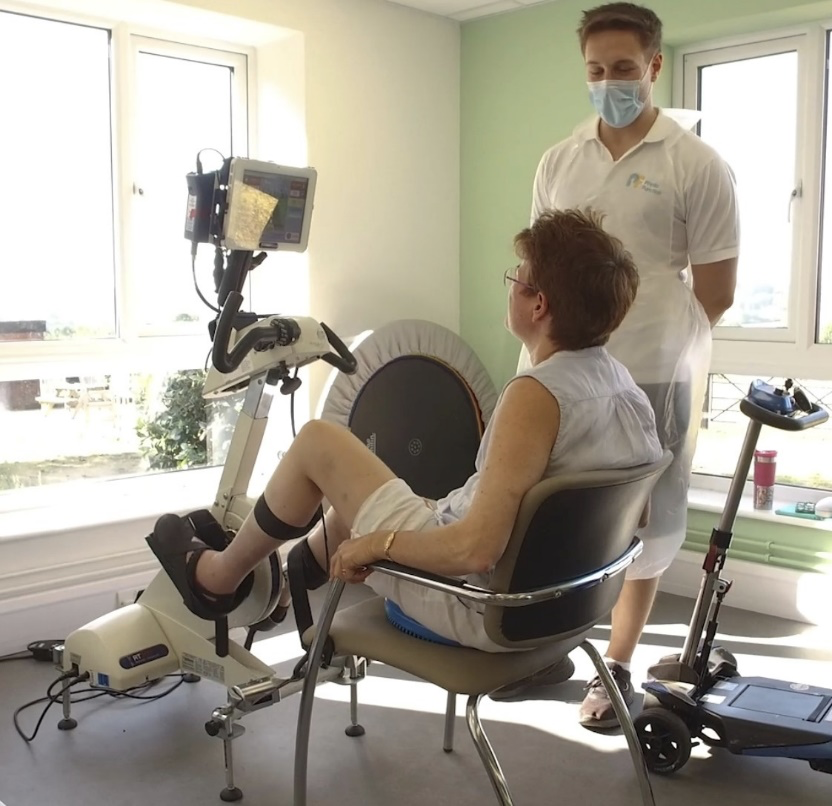
Functional Electrical Stimulation (FES) assisted cycling, originally utilised by those with spinal cord injury has become increasingly used and studied in people with Multiple Sclerosis (PwMS) and stroke survivors. FES assisted cycling involves the application of multiple channels of FES via adhesive electrodes over major muscle groups that are involved in the propulsion of a leg, arm, or hybrid cycling device. When stimulated, the resulting muscle contraction helps the individual to complete active exercise.
At PhysioFunction, we invited a small cohort of four stroke survivors and four PwMS to complete a ten session course of 30-minute FES assisted exercise sessions, using different assistive devices with appropriate stimulation protocols.
PwMS used the RT300 FES assisted leg cycle with stimulation applied to six lower limb muscle groups (selected following assessment and applied to either the gluteals (bum), quadriceps (front of thigh), hamstrings (back of thigh), tibialis anterior (shin) or gastrocnemius (calf) on one or both legs). Stroke survivors used the RT200 FES assisted hybrid trainer (seated cross trainer) with stimulation applied to three muscles of the arm (biceps (front of the arm), triceps (back of the arm) and rotator cuff (shoulder)), and three muscles of the leg (gluteals, quadriceps and hamstrings) on the affected side.
All participants except two PwMS who had a functional movement classification (FAC) of zero and one respectively completed five timed sit to stand (5xSTS), timed up and go (TUG) and six minute walk (6mWT) before and after the intervention. The two PwMS with low FAC scores did complete the 5xSTS tests.
In the PwMS cohort, all participants improved their 5xSTS time by 13 to 41 per cent, and of those who completed the TUG and 6mWT both improved their 6mWT distances by 1.32 per cent and 29 per cent respectively. Additionally, all participants improved their recorded cycling power and symmetry.
In the stroke survivor cohort, all participants completed all measures, and all improved their 5xSTS time by six to 30 per cent and 6mWT distance by one to 24 per cent, with two increasing their distance by greater than 34.4m, representing a clinically important difference in pre and post measures. Three of the four improved their TUG times by seven to 22 per cent. Cross training power increased in all participants and symmetry improved in all but one.
The results of this small scale study suggest that a short-term FES-assisted exercise programme can lead to meaningful improvements in mobility, muscle strength and symmetry in people with chronic neurological disability, which has the potential to improve the functional ability, independence and quality of life in this population.
At Physiofunction we offer sessions using the RT300 and RT200 FES assisted exercise devices administered by other expert clinical team to our clients. Please contact us at [email protected] or on 01327 842321 for more information or to book a consultation.