


Brain injury

English football will introduce heading guidance across every level of the professional and amateur game from the start of the 2021-22 season, it was announced today.
The new guidance, which is specifically focused on training sessions where the majority of heading occurs, has been designed to meet the requirements of each level of English football. The guidance will apply to clubs in the Premier League, EFL, Barclays Women’s Super League, FA Women’s Championship, the National League System, the Women’s Football Pyramid Tiers 3 and below, all grassroots football, and across the England national teams. The new heading guidance has been agreed between the FA, Premier League, EFL, the PFA and the LMA.
A study has identified the first effective and highly scalable intervention to address cognitive deficits that can persist for years after a mild traumatic brain injury especially after a concussion or blast exposure.
The traumatic brain injury study utilised the computerised brain training app BrainHQ made by Posit science via Telehealth. The peer-reviewed study results were published in Brain: A Journal of Neurology.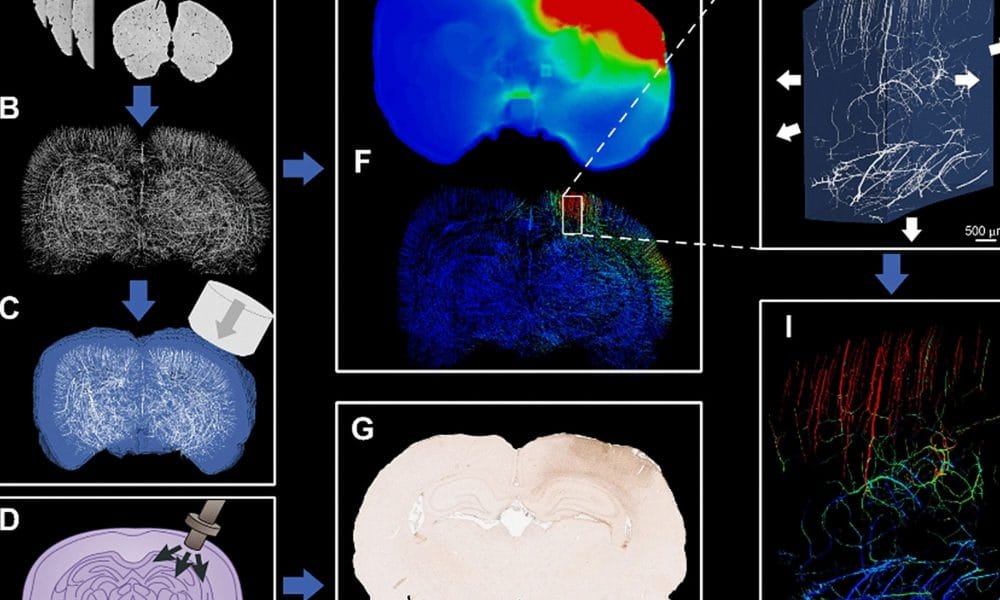
Researchers have created a traumatic brain injury (TBI) computer model that maps blood vessels in a rat brain in the highest resolution yet.
The team at Imperial College London say the models could help improve understanding of how blood vessels are affected by TBI, as well as its effects on the protective layer encasing them known as the blood-brain barrier (BBB), which protects the brain from harmful circulating molecules and pathogens. If the methods translate well onto human brains, Imperial say they could also help improve understanding of how TBIs develop and how best to treat and protect against them. The simulations could even help to replace animal models of TBI, potentially reducing the use of animals in brain research. TBIs are the most common cause of chronic disability in under 40-year-olds and result from severe blows or jolts to the head.
A study of 44 rugby players, almost half of which had sustained a mild head injury while playing, has revealed a significant proportion had signs of white matter abnormalities.
It is the first study to assess long term changes in MRI images of professional rugby players. It also revealed abnormal changes in white matter volume over time. The researchers say that more work is needed to determine the long term effects of rugby on player’s brain health.
A vocational rehabilitation programme in the North East aimed at getting those living with a brain injury back into working life has been resurrected by a community charity.
Headway Tyneside worked closely with the NHS and fellow charities, Headway County Durham and Headway Darlington & District, to ensure the programme could continue following last year’s closure of Newcastle-based providers, Momentum Skills. ‘Headway to Work’ is the newly-branded service which will support around 14 people per year living in Durham and Darlington. Each participant will be individually assessed by therapists to gain an understanding of their difficulties, enabling the team to offer personalised support throughout the programme.
Suicidal risk and understanding how best to respond was the subject of a recent webinar for professionals working with brain and spinal injured clients. Assessments including how to assess the different levels of risk, including looking out for red flags, primary drivers and secondary drivers, were all addressed to empower people to deal with what [...]

A report which sets out recommendations to improve services and support for people with Acquired Brain Injury in Wales has been launched. In its ‘Amser am newid’ report, UKABIF covers five key areas including health and social care, education, criminal justice, sport, and welfare. It will be circulated within the Senedd after the summer recess. [...]
A new study is to investigate traumatic brain injury in armed forces personnel. The five-year project will look at the effects of TBI in battlefield casualties from the UK Armed Forces. The TBI project aims to improve understanding of the relationship between environmental factors, such as TBI, and long-term neurological outcomes. Participants for the TBI [...]

The collapse of Denmark’s Christian Eriksen due to a cardiac arrest during his team’s opening game at Euro 2020 shocked football fans worldwide and raised many questions about player safety. Here, sports disputes lawyer Barrington Atkins examines football authorities’ approach to the safety of players and asks whether UEFA has done enough to protect those competing at Euro 2020
Concussion safety was meant to be at the forefront of the Euro 2020 finals. All 24 teams committed to following the recommendations of the Union of European Football Associations (UEFA) Concussion Charter, which was a commitment to player welfare and player safety.
A new signalling pathway has been discovered that could shed light on damage repair during brain injury.
The new understanding of what causes neural cells to enter divisions after damage in the brain is a “valuable opportunity” to potentially prevent neuronal death or neurodegeneration following injury. The research, led by the University of Plymouth, explores how most human cells are able to repair damage by dividing at wounds - but mature nerve cells, or neurons, will most probably die if they attempt division. This happens during brain injury or in conditions including Alzheimer’s Disease. But now, the study has uncovered a pathway that has shed new light on how these divisions may be triggered. The research focuses on intracellular structures called microtubules – which are found in most animal cells, and can be damaged by a build-up of a protein called Tau in the brain during Alzheimer’s.


