


Brain injury

If injury or illness means living life your way isn’t easy, live-in care can provide support. Agincare is experienced in supporting people with acquired brain injuries, acquired spinal cord injuries and more diverse neurological needs.
As a family owned and run business and one of England’s largest care groups, we’re proud to have been delivering skilled and professional care with a smile for 35 years. If you’re looking for round-the-clock support without compromising on your choice, lifestyle, or independence, live-in care is designed for you. To discover the difference that live-in care can make, we’d like you to meet Callum. Callum’s story Callum is no less an adrenaline junkie today than he was as a teenager. Unfortunately, at age 16, while having fun with friends, Callum fell 30 feet. He sustained trauma to his head, memory loss and an acquired spinal cord injury. Callum spent the next two years in hospital. With his mobility declining and behavior becoming challenging, Callum’s social worker decided to research live-in care.
The Children’s Trust has launched a programme to help education professionals gain a better understanding of how an acquired brain injury (ABI) can affect young people.
The initiative will be used to show teachers and carers the daily challenges each child with ABI faces. Every professional in the education sector can access the programme, which features a number of 30 minute online interactive sessions delivered from a teacher's point of view.
A pioneering telerehabilitation initiative which enabled people recovering from acquired brain injury to continue their therapies during the pandemic has reported significant progress for participants during the programme.
The evaluation of Neuro-Rehabilitation OnLine (N-ROL) and the fact participants “significantly improved on the two planned quantitative outcome measures” provides further academic analysis to support the hugely positive anecdotal evidence about the impact of telerehabilitation, which has grown exponentially in its use during the past year.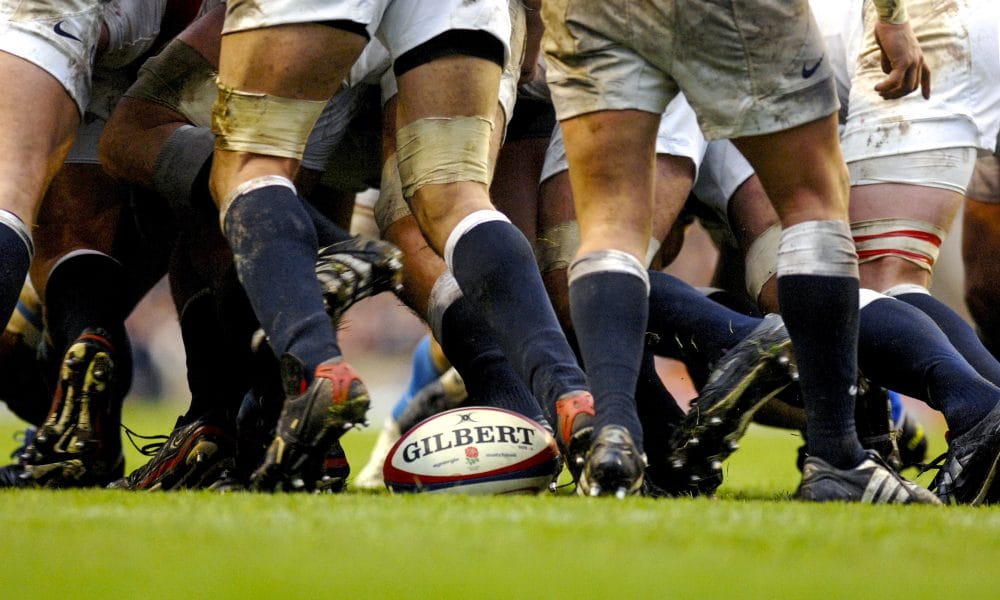
When it comes to concussion one of the hardest things for clinicians to achieve is a comprehensive diagnosis.
This makes it even harder for those working in contact sports to achieve this, with time usually of the essence when an assessment is made mid-game. Re:Cognition Health is one firm looking to make progress in this area and is doing so through a number of technological innovations. Recently the company has taken a particular focus on creating a device that can diagnose one of the most common conditions brought on by contact sports in chronic traumatic encephalopathy (CTE).
Speaking at Calvert Reconnections’ recent Zoominar for case managers and solicitors, activity lead Rob White made a compelling case for rehabilitation in the great outdoors
“The use of outdoor activities makes our rehabilitation service unique,” said Rob. “Working with leading clinicians and academics, our service combines traditional multi-disciplinary clinical therapies with physical activity in the outdoors to support individuals in their recovery from brain injury.” Rob brings over 20 years’ worth of outdoor coaching experience to the Calvert Reconnections team. He has always been a strong advocate for using outdoor activities to facilitate personal development and this underpins his practice. In 2018, he qualified with an MSc in Psychology. He researched the influence of rock climbing on people’s mental wellbeing and this highlighted the transformative potential of the outdoors. Rob uses his knowledge when designing and delivering programmes, focusing on maximising wellbeing by using adventurous activities and the outdoor environment.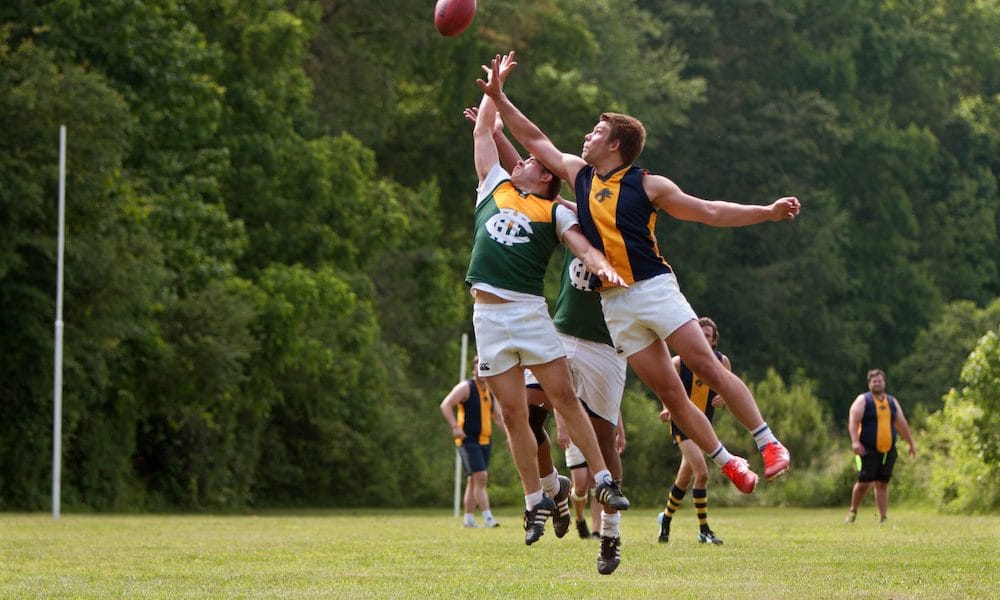
Further evidence of the long-term impact of concussion in sport has emerged through the findings of a new study into young Australian Rules football players.
The new research has discovered that physical damage is still evident in the brains of players months after sustaining a concussion, adding further to concerns around the long-term neurological health of sports players after a head injury. The study, from Monash University, found damage to the white matter and cortex in players even six months after their concussion, raising concerns that Australian Rules players who experience concussion result in persistent brain injury. Twenty-six young male Australian footballers with sports-related concussions - as well as 27 non-collision sport athletes as controls - were recruited to the study, which investigated the presence of brain abnormalities in Australian rules footballers with a history of sports-related concussion as determined by MRI scans. None of the footballers had sustained a concussion in the preceding six months, and all players were asymptomatic.
The use of Neurologic Music Therapy (NMT) can be critical for young children starved of oxygen at birth as evidence shows the injured brain can recover function, according to experts in the field.
A child’s brain structure changes as a result of illness or injury and research shows that the injured brain can recover function and the ability to respond to music can remain intact, even when those functions of the brain are damaged. For young people who have suffered a brain injury—either at birth, acquired, trauma-related or as a result of a condition such as cerebral palsy or epilepsy—NMT uses specific, age-appropriate techniques to help maintain or improve skills such as speech, language and communication—as well as motor and cognition skills. In the case of children with an acquired brain injury, NMT techniques are typically focused on a child’s development and enabling them to acquire functional skills for the first time. Lucy Collings Pettit, Neurologic Music Therapist at Chroma, says: “Babies who are starved of oxygen at birth can suffer Hypoxic—Ischemic Encephalopathy (HIE). In such an event, a child’s brain injuries can result in developmental and cognitive impairments.
People who have had a brain injury can experience some changes in their emotional reactions, such as personality changes, mood swings, depression, anxiety, anger and post-traumatic stress disorder. Here, Julie Booth, head of quality at Exemplar Health Care, talks about the emotional effects of a brain injury and how the care provider supports people through the recovery process
When someone experiences a brain injury, it’s often completely life changing - a person’s role in their workplace, social group and family is affected, which can leave them feeling unsure of who they are and what their place in life is. It can also have extensive cognitive impacts, leaving an individual confused, frustrated and unable to comprehend what’s happening around them or why. This can result in changes to mood, behaviour and emotional responses - some people might become angry and aggressive, some people can become anxious and stressed, and others may become depressed and withdrawn. It’s important to remember that there’s no right way to feel or respond following a brain injury, and that all responses are valid.
Understanding suicidal risk and supporting professionals to deal with such a hugely difficult topic is to be tackled in an event being held next week.
Life-changing brain, spinal cord and complex injuries can be significant factors in increasing this risk, as a result of the huge spectrum of difficult emotions a person faces in dealing with their new reality. And for the professionals dealing with clients going through such trauma, suicidal thoughts and acts can cause great distress to them and it can be difficult to know how to react and what action to take. Through the ‘Understanding Suicidal Risk - A Guide for Professionals’ event, held by Sphere Memory and Rehabilitation Team, advice and guidance will be offered to empower those working in complex injury to deal with such situations.
Teachers and support staff already play an essential role in a child’s development, but their importance is increased tenfold when dealing with a child who has endured a brain injury.
Their return to school is one of the biggest steps of the rehabilitation process, so it is crucial this is done properly. To make sure all education staff are properly trained in how to do this, the National Acquired Brain Injury in Learning and Education Syndicate (N-ABLES) have launched a new set of resources. Created in partnership with The United Kingdom Acquired Brain Injury Forum (UKABIF), the information will be used to help children from ages four to 18. From inclusion to understanding, the resources highlights a number of steps teachers can take to make sure these children are not left behind.


