News
The latest news from across neurorehabilitation.
 Spinal injury2 Jul
By Jin Garcha, registered nurse and complex care specialist I’m Jin Garcha, a registered nurse and complex care specialist. For more than three decades, I have worked alongside people with complex health needs, including people with spinal cord injury, their families and care teams. As the clinical director at Premium Care Solutions, I know how [...]
 Patient stories2 Jul
A service user at Cygnet Alders is making a powerful difference to others by bravely sharing her lived experience and leading a psychology group for both staff and patients to raise awareness of head banging and how it can be reduced. Charley, who has been at the Gloucester-based Cygnet Health Care hospital on Podsmead Road [...]

By Lyndsey Marie, clinical lead, Askham Rehab, Cambridgeshire, UK Abstract Prolonged Disorders of Consciousness (PDOC) represent some of the most complex presentations within neurorehabilitation. Individuals often require long-term specialist management addressing medical stability, posture and positioning, communication, cognition, respiratory function, nutrition, psychological wellbeing, and family support. Sustained interdisciplinary collaboration is therefore essential to prevent secondary [...]
 Spinal injury1 Jul
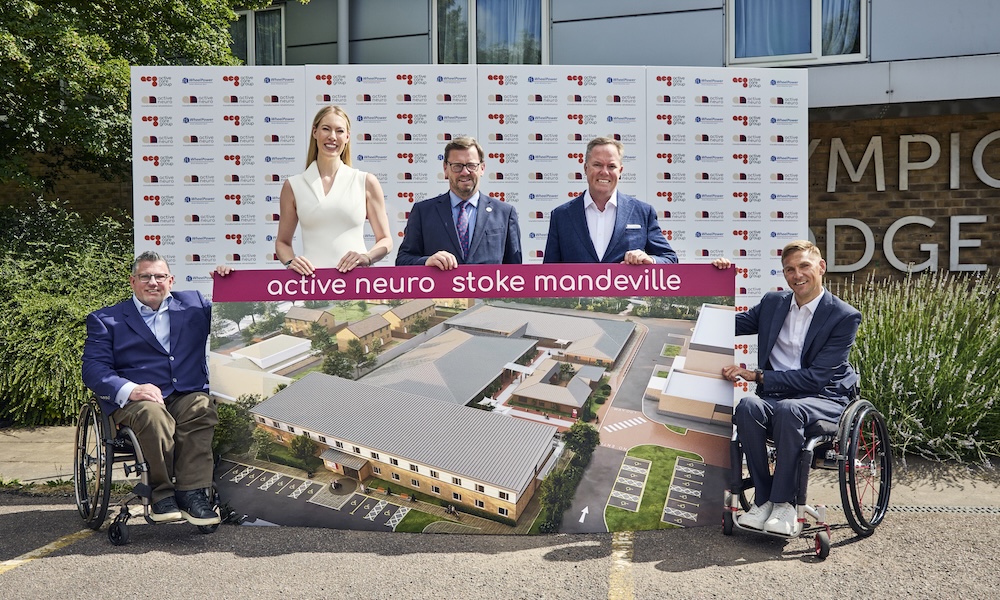
Complex care provider Active Care Group and charity partners WheelPower have announced an agreement that will enable the development of the new Active Neuro Stoke Mandeville Private Rehabilitation Hospital – a significant investment in the future of specialist spinal and neuro-rehab. Located next to Stoke Mandeville’s National Spinal Injuries Centre, the new 52-bed Active Neuro [...]
 Opinion1 Jul
By Eyal Samuel Shachar, CEO, Bioxtreme In the past stroke rehabilitation plans were centered on helping patients relearn movement by practicing tasks correctly and through repetition. Occupational therapists helped to guide patients toward proper movement patterns and worked to minimize errors that may slow recovery. Stroke rehabilitation continues to evolve with advances in robotic rehabilitation [...]
 Brain injury26 Jun
Former professional rugby player David Jackson has begun 100 ultramarathons in 100 days to raise £1m for two brain injury charities. Jackson, known as “Jacko”, suffered a seizure on the pitch in 2013 while playing for Nottingham Rugby. He was forced to retire from professional rugby because of the traumatic brain injury he had sustained. [...]
 Multiple sclerosis25 Jun
The European Commission (EC) has approved Cenrifki for adults with secondary progressive multiple sclerosis (MS) who had no relapses in the previous two years. The decision follows a positive opinion from the European Medicines Agency’s Committee for Medicinal Products for Human Use. Sanofi said Cenrifki, also known as tolebrutinib, is the first disease-targeting therapy approved [...]
 Stroke24 Jun
Drug-induced hypometabolism may slow stroke-related brain damage, according to early research involving animals and people. The experimental treatment uses two existing medicines to reduce metabolism and create a state resembling hypothermia. Tests in mice and rhesus monkeys found that the approach protected brain tissue, while an early trial involving 32 stroke patients reported no notable [...]
 Brain injury24 Jun
A light-based sensor can detect head injury biomarkers at extremely low levels and could help doctors make faster diagnoses and treatment decisions. The chip-based technology uses a metasurface, an ultra-thin material patterned with tiny features that manipulate light in ways conventional lenses cannot. Coating a metasurface with antibodies that bind to specific target molecules allows [...]
 Huntington's23 Jun
The first patient has received an experimental stem cell therapy in a clinical trial for Huntington’s disease. The phase 1b/2a trial will assess the safety of hNSC-01 neural stem cells delivered directly to the brain using a specialised targeting system in an MRI suite. Neural stem cells can develop into several types of cells found [...]