News

In an early new year boost for Calvert Reconnections, case managers and NHS clinicians throughout the UK have praised the centre’s “life-changing” approach to ABI rehabilitation. Following recent experience days and visits to the Keswick-based residential centre, a range of brain injury professionals have shared their thoughts. “Calvert Reconnections is an amazing place,” said Jamie [...]

There's no better time to look for new opportunities than the beginning of a new year. NR Times Jobs has all the latest jobs from across the neuro and spinal injury rehab space. Here are our picks from the past week. Rehabilitation Case Manager (Remote) We are looking for Rehabilitation Field Case Managers, with [...]

Researchers have discovered that a protein called phosphorylated α-synuclein, which is associated with several neurodegenerative diseases such as Parkinson’s and Lewy body dementia, is also involved in the normal processes of how neurons communicate with each other in a healthy brain. Phosphorylation is a process where a phosphate ion is added to a specific amino [...]

The value of the global market for rehab robotics is expected to more than quadruple between 2022 and 2030, data suggests. Kings Research reports that the market was recorded at US$239.1m in 2022, with growth likely to take it to US$1026.2m by 2030. As the world's population continues to grow and the field of robotics and AI advances, [...]

Pharma firm AbbVie has announced the launch in the European Union of Parkinson’s treatment Produodopa.
The product is use for the treatment of advanced Parkinson's with severe motor fluctuations and hyperkinesia (excessive movement) or dyskinesia (involuntary movement), and when available combinations of Parkinson's medicinal products have not given satisfactory results. PRODUODOPA is the first subcutaneous 24-hour infusion of levodopa-based therapy for the treatment of severe motor fluctuations in people living with advanced Parkinson's disease whose symptoms are inadequately controlled by other therapies.
A US university has developed a new robotic platform, which utilises a patient’s brainwaves and muscle activity, to enable post-stroke rehab.
The assistive planar robot includes a closed-loop feedback system to monitor the muscle and brain activity of the user in order to trigger the execution of reach and grab in an adaptive way.
In a new paper, researchers at the University of Rhode Island Motor Control and Rehabilitation lab write: “Numerous rehabilitation approaches such as muscular electrical stimulations, brain-computer interfaces, and transcranial magnetic stimulation have been investigated to assist the affected individuals.

A combination of 11 proteins can predict long-term disability outcomes in multiple sclerosis (MS) for different individuals, new research has found. The identified proteins could be used to tailor treatments to patients based on the expected severity of the disease. Julia Åkesson is doctoral student at Linköping University and the University of Skövde. The researcher [...]
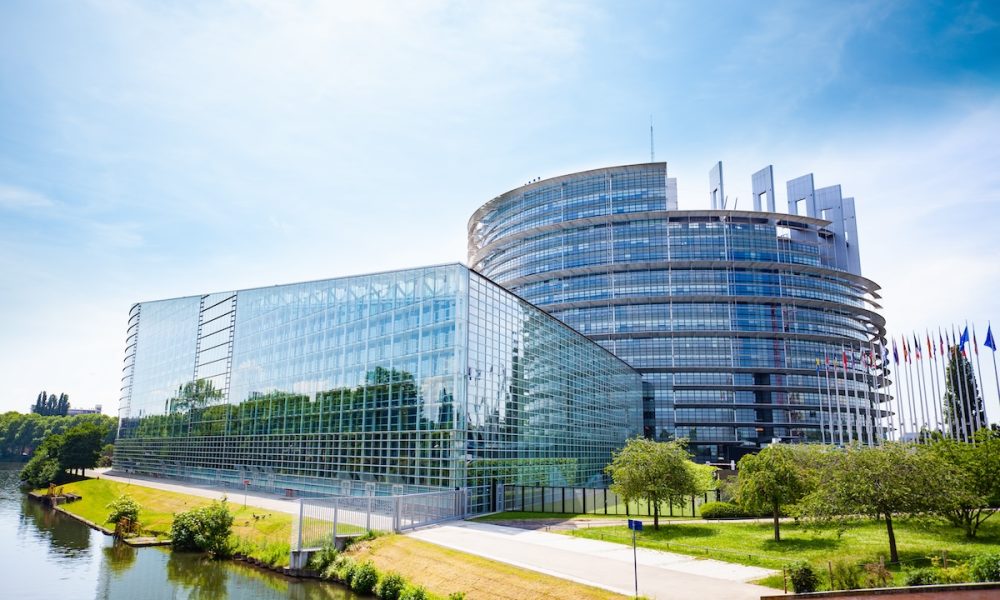
The global pursuit of new neurological treatments has been bolstered by a €38 million boost from the European Commission.
EBRAINS is an EU co-funded collaborative project to develop a “digital ecosystem” that enables researchers and clinicians to explore the complexity of the brain at various scales. From here they can derive new solutions for neurological medicines, interventions and technologies. The European Commission has now accepted the “EBRAINS 2.0” proposal, granting €38m for the further development of services of the EBRAINS research infrastructure to 2026.