



Research

Swapping salt for a substitute could help prevent thousands of strokes, and potentially millions of deaths, each year, new breakthrough research has revealed.

Athletes with a history of concussion may show more serious brain injury from a later concussion, new research has revealed. In comparison to athletes with no history of concussion, those who have sustained head injuries previously may show greater impact, particularly in middle regions of the brain that are more susceptible to damage. Athletes with a history of concussion should be monitored more closely, the research team said in light of their findings. "We know concussions may have long-term effects on the brain that last beyond getting a doctor's clearance to return to play," said study author Dr Tom A. Schweizer, of St. Michael's Hospital in Toronto, Canada.

People with mentally stimulating jobs have a lower risk of dementia in old age than those with non-stimulating jobs, a new international study has found. The large multi-cohort study suggests one possible explanation is that cognitive stimulation is linked to lower levels of certain proteins that may prevent brain cells forming new connections (processes called axonogenesis and synaptogenesis). Explaining the research, lead author Professor Mika Kivimaki, of UCL Epidemiology & Health, said: “Cognitive stimulation is assumed to prevent or postpone the onset of dementia, but trial results have varied and most recent long-term studies have suggested that leisure time cognitive activity does not reduce risk of dementia. "Exposure to cognitive stimulation at work typically lasts considerably longer than cognitively stimulating hobbies, yet work-based studies have also failed to produce compelling evidence of benefits.” An international team of researchers set out to examine the association between cognitively stimulating work and subsequent risk of dementia and to identify protein pathways for this association.

UK researchers have found further evidence of the ongoing mental impacts of COVID-19 in people who have recovered from the disease.
In a study involving more than 80,000 people, researchers found that those with more severe COVID-19 symptoms scored lower in an a series of online tests, with performance on reasoning and problem-solving tasks being most affected. Further analysis showed that those who received mechanical ventilation to help them breathe whilst in hospital had the greatest impairment on cognitive tasks. According to the team, the findings further highlight how COVID-19 infection can have lasting, and measurable, impacts on people’s brain function.
A new study of patients with cerebral venous thrombosis (CVT) following COVID-19 vaccination has given a clearer guide for clinicians trying to diagnose and treat patients.
The research, from UCL and UCLH, is the most detailed account of the characteristics of CVT, when it is caused by the novel condition vaccine-induced immune thrombotic thrombocytopenia (VITT). VITT is a condition characterised by a blockage of the veins and a marked reduction of platelets, blood components which are an important part of the blood clotting system. The commonest and most severe manifestation of VITT is CVT, in which veins draining blood from the brain become blocked. This new study looks in detail at 70 patients with VITT-associated CVT following vaccination are compared to 25 with CVT without evidence of VITT.
In a world-first, a UK trial will test if a cannabis-based mouth spray can be used to treat aggressive brain tumours.
A major trial of cannabis-based drug Sativex in treating the most aggressive form of brain tumour is set to launch at 15 NHS hospitals around the UK. The new phase II trial, led by the University of Leeds, will assess whether adding Sativex – an oral spray containing cannabinoids THC and CBD – to chemotherapy, could extend life for thousands diagnosed with a recurrent glioblastoma. Glioblastomas are the most common and most aggressive form of brain cancer, with around 2,200 people diagnosed each year in England alone. Almost all glioblastomas recur even after intensive treatment including surgery, radiotherapy and chemotherapy, and average survival is just 12-18 months from first diagnosis.
Motivation depends on how the brain processes fatigue, new research has revealed.
Willingness to undertake tasks is not static and depends upon fluctuating rhythms of fatigue, researchers from the University of Oxford and University of Birmingham have discovered. Fatigue – the feeling of exhaustion from doing effortful tasks – decreases motivation and makes people want to take a break. Although scientists understand the mechanisms the brain uses to decide whether a given task is worth the effort, the influence of fatigue on this process is not yet well understood. The research team conducted a study to investigate the impact of fatigue on a person’s decision to exert effort and found that people were less likely to work and exert effort – even for a reward – if they were fatigued.
A pioneering gene therapy programme which could pave the way for novel treatments for neurodegenerative diseases has been launched.
The research has been awarded £513,141 from LifeArc and the Motor Neurone Disease Association to test the feasibility and efficiency of an ambitious gene therapy programme to treat motor neurone disease (MND) and frontotemporal dementia (FTD) patients with underlying mutations in a causative gene known as C9orf72. If successful, this programme could lead groundbreaking research into future clinical trials for one of the most common forms of these incurable neurodegenerative diseases within the next few years. The research, at the University of Sheffield in collaboration with the Cell and Gene Therapy Catapult, is led by Dr Guillaume Hautbergue, head of the RNA Biology Laboratory, in collaboration with Professor Mimoun Azzouz and Professor Dame Pamela Shaw.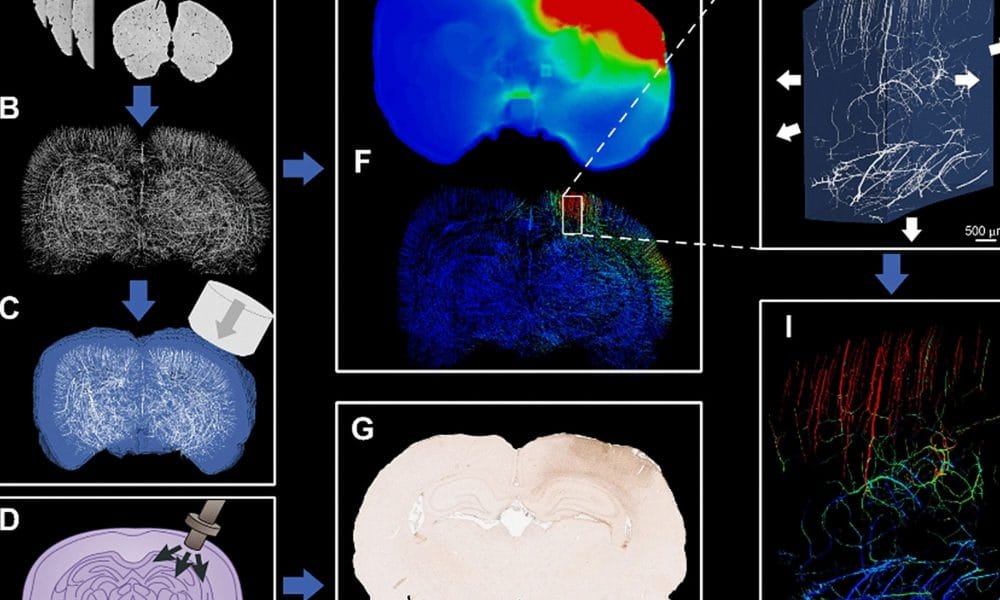
Researchers have created a traumatic brain injury (TBI) computer model that maps blood vessels in a rat brain in the highest resolution yet.
The team at Imperial College London say the models could help improve understanding of how blood vessels are affected by TBI, as well as its effects on the protective layer encasing them known as the blood-brain barrier (BBB), which protects the brain from harmful circulating molecules and pathogens. If the methods translate well onto human brains, Imperial say they could also help improve understanding of how TBIs develop and how best to treat and protect against them. The simulations could even help to replace animal models of TBI, potentially reducing the use of animals in brain research. TBIs are the most common cause of chronic disability in under 40-year-olds and result from severe blows or jolts to the head.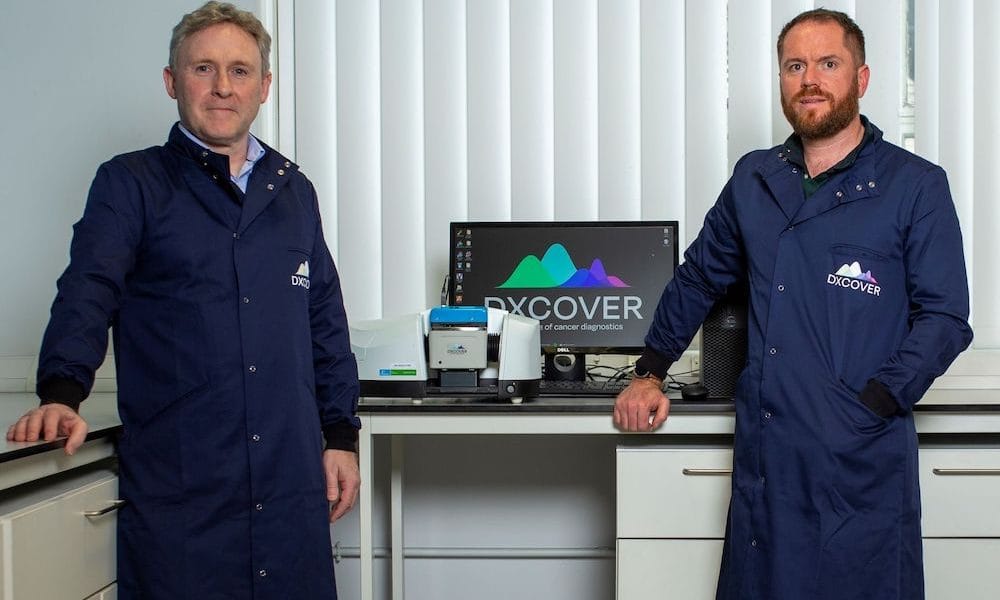
Hailed as the future of cancer diagnostics, Dxcover is set to revolutionise healthcare by pioneering a new test to diagnose cancer more quickly, simply and cost-effectively than ever before. CEO Dr Mark Hegarty and chief technology officer Dr Matthew J Baker discuss their pioneering work to date in brain cancer detection
Through the AI-led analysis of a single drop of blood, it is possible to detect brain cancer. Having been verified through two groundbreaking clinical studies, the Dxcover Brain Cancer liquid biopsy, the first of its kind in the world, is now set to go into pivotal trials with a view to commercialisation in 2024 - paving the way to save lives and improve quality of life globally through the earlier diagnosis of cancer. With the creation of the Dxcover Platform - which combines novel hardware with artificial intelligence algorithms to analyse a patient's blood - and its patented Drop Dry Detect method of detecting cancer, a process which currently may take eight weeks or more to fully diagnose can be fast-tracked into a matter of minutes.


