


Tech & industry

Daily exposure to blue wavelength light each morning has been linked to enabling people to sleep better by ‘re-entraining’ their circadian rhythm. And researchers at the University of Arizona have now demonstrated that it may be particularly useful in people recovering from mild traumatic brain injury (mTBI). In a randomised clinical trial, adults with mTBI used a cube-like device that shone bright blue light at participants for 30 minutes early each morning for six weeks. Control groups were exposed to bright amber light.
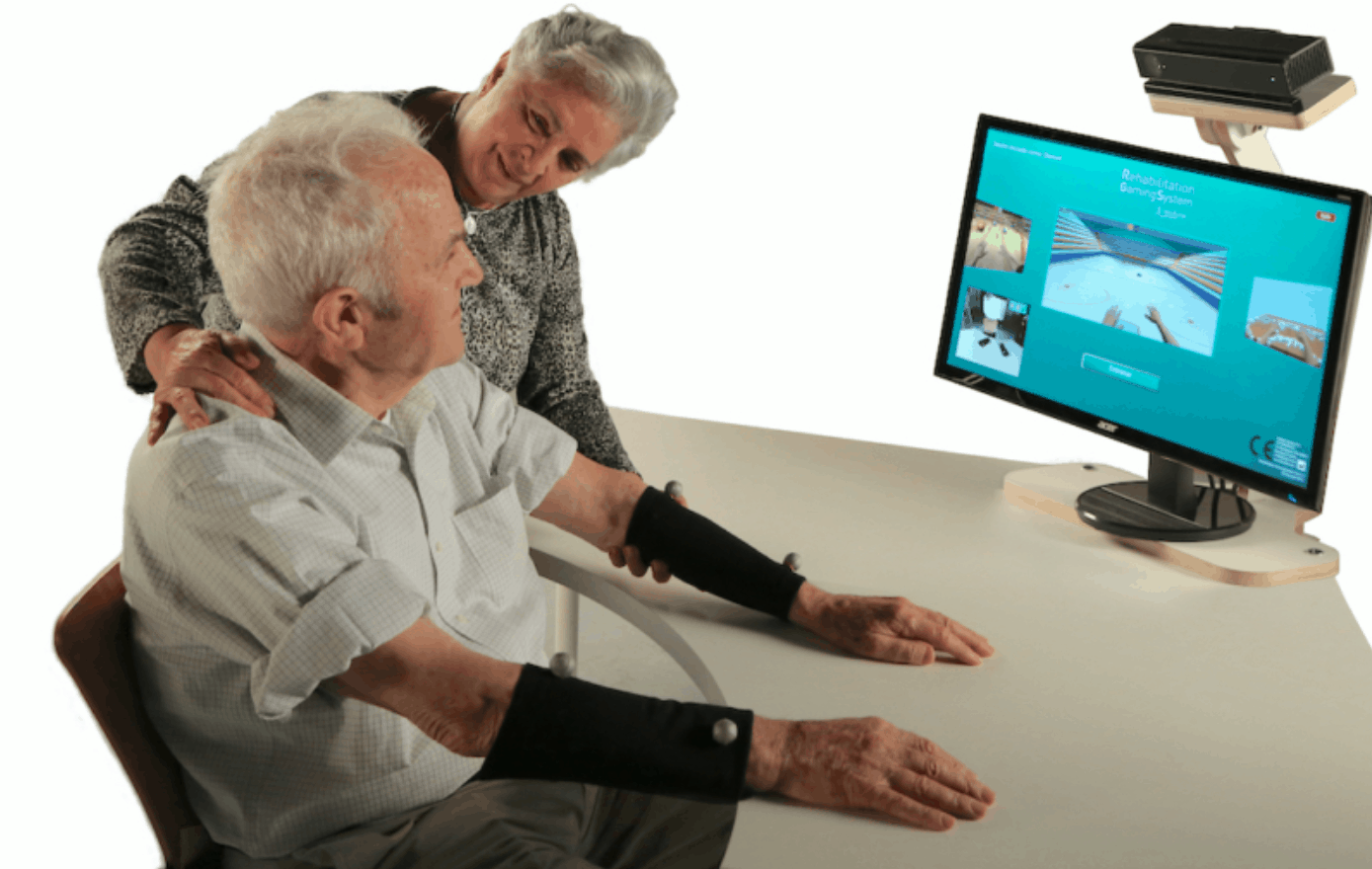
When “combined with conventional rehabilitation” it has the potential to improve motor and cognitive performance in neurologic patients alongside “additional benefits” (Maier M et al, 2019). New tests of its efficacy continue to emerge, while technological advancement is blurring the lines between the real and virtually real. Few VR rehabilitation systems can boast as much clinical evidence as that developed by Barcelona tech firm Eodyne in partnership with SPECS-lab, part of the Institute for Bioengineering of Catalonia (IBEC).

 New York-based Spine Care Technologies, launched in March 2018, believes it has the answer in the Extentrac Elite; which enables non-surgical, drug free, disc and spine care treatment.
The device is a multidirectional decompression device used to aid the treatment of spinal injuries, mostly from the thoracic (mid) to the lumbar (lower) spine.
It is used in in the treatment of minor degenerative disc disease, through to drop-foot and serious neurological impingement.
New York-based Spine Care Technologies, launched in March 2018, believes it has the answer in the Extentrac Elite; which enables non-surgical, drug free, disc and spine care treatment.
The device is a multidirectional decompression device used to aid the treatment of spinal injuries, mostly from the thoracic (mid) to the lumbar (lower) spine.
It is used in in the treatment of minor degenerative disc disease, through to drop-foot and serious neurological impingement.
>It will affect around one in two stroke survivors, according to the Stroke Association, and roughly at least a third of people with MS. Meanwhile, over 80 per cent of people with Parkinson’s may be affected (Suttrup et al, 2016). Speech and language therapists and other rehab professionals may employ a range of techniques aimed at triggering swallowing reflex and strengthening muscles needed for chewing and swallowing.

“Exercise helps maintain brain connections and counters brain shrinkage from Parkinson's disease as well as from brain aging,” wrote Eric Ahlskog, a neurologist and author of The New Parkinson's Disease Treatment Book. More exercise is also being increasingly linked by researchers to faster stroke recoveries – and lower stroke risk. A systematic review of evidence published in November in the Journal of the American Heart Association (JAHA) examined 19 studies of aerobic training programmes for stroke survivors.

Most severe TBIs are treated in intensive care units (ICUs), but in spite of proper and high- quality care, about one in three patients dies, researchers behind the study say. Their paper aims to use AI to tackle the challenge of accurately monitoring TBI patients in intensive care when they are unconscious. The Finnish researchers say: “In the ICU, many tens of variables are continuously monitored – such as intracranial pressure, mean arterial pressure and cerebral perfusion pressure – that indirectly give information regarding the condition of the patient. “However, only one variable, such as intracranial pressure, may yield hundreds of thousands of data points per day. Thus, it is impossible for the human brain to comprehend the resulting millions of daily collected data points from all monitored data.”

Swedish innovation the Mollii Suit is helping neuro- rehab patients with a range of conditions to regain lost functions and boost their quality of life, as Richard Welch explains here.

Iñigo Fernández de Piérola followed in his mother’s footsteps and studied psychology. Shortly after finishing his studies he joined his mother and a few other psychologists in opening a psychology clinic in a medium sized city in the north of Spain in the heart of wine country. During his time as a practicing psychologist he was working with individuals with deficits in cognitive functioning related to Alzheimer’s, Parkinson’s, traumatic brain injury, neurodegenerative diseases, neurodevelopmental disorders and others.

Engineers at Columbia University have developed the Trunk-Support Trainer (TruST), which assists and trains people with SCIs to sit more stably by improving their trunk control, and thus gain an expanded “active sitting workspace” without falling over or using their hands to balance. Their study, published in Spinal Cord Series and Cases, is the first to measure and define the sitting workspace of patients with SCI based on their active trunk control. "We designed TruST for people with SCIs who are typically wheelchair users," says Sunil Agrawal, a professor of mechanical engineering and of rehabilitation and regenerative medicine. "We found that TruST not only prevents patients from falling, but also maximizes trunk movements beyond patients' postural control, or balance limits."
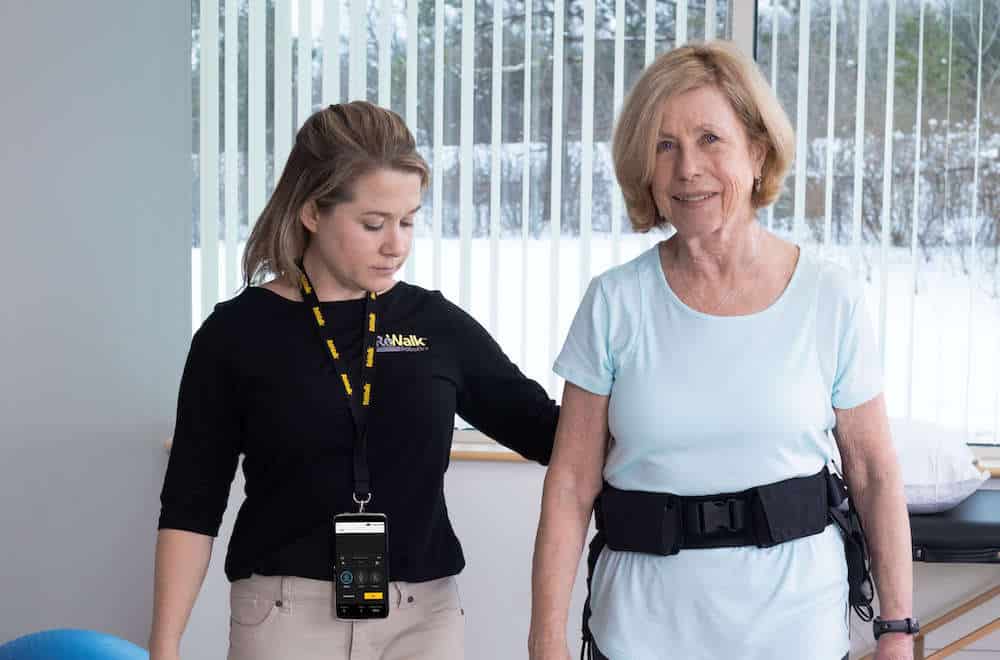
MOTIONrehab believes in using technology that can help and promote rehabilitation. It is essential that any technology implemented by MOTIONrehab is there to help promote outcomes and functional recovery. This means the technology has to facilitate high repetition and practice of movement patterns to provide intensive neuro-rehab. In 2018, MOTIONrehab opened the UK’s first highly intensive neuro-rehab centre based in Leeds. The selection of devices for the centre was crucial and Director, Sarah Daniel, ensured the devices chosen were backed by clinical evidence and could really promote outcomes by allowing patients to practice high repetitions with natural movement patterns.


