A “wind of change” in personal injury litigation is enabling the traditional way specialist claims into brain injuries and other major cases are handled to be revolutionised, new research has revealed.
The COVID-19 pandemic has forced major change in the way claims are handled, with much of it being done remotely out of necessity amidst ongoing restrictions on travel and meetings.
However, new research has revealed that as a result of this, litigation has become more efficient, with remote case management conferences, joint settlement meetings and low value trials all set to become the ‘new normal’ post pandemic.
Visitors from across the world will join an array of global speakers at a major event in caring for young people with brain injuries.
The fourth National Paediatric Brain Injury Conference, organised by The Children’s Trust - which provides residential and community care for children with neurological injuries and disabilities - is to be held online due to the ongoing impact and implications of COVID-19.
And while the pandemic will prevent the Connections and Collaborations being held in person, the decision to take it online means it can attract an audience far beyond its base in Tadworth, Surrey.
The event, on February 4, brings together some of the neuro sector’s leading clinical professionals to explore some of the fundamental elements involved in a child’s recovery following an acquired brain injury.
For Leanne, who has MS, the opportunity to gather with loved ones on Christmas Day is one she feels she must decline. Here, she shares her reasons for choosing to be lonely this Christmas.
Christmas is my favourite time of year, and ordinarily I’d be out celebrating, seeing friends and family, and planning something really fantastic to see in the new year.
But like for so many other people, 2020 is going to be so different. I’ll be completely on my own. And while under normal circumstances that would be the most heartbreaking Christmas I could imagine, this year it is undoubtedly my best option.
At least, that way, I’ll still be here to enjoy 2021 and the years beyond that.
Case management has faced enormous challenges during the pandemic, which have necessitated big changes from within the profession. Here, in the latest in our Q&A series with case managers from across the country, Jenny Webster from Westcountry Case Management shares her experiences.
Can you summarise how the past few months have been for you. The last few months have been interesting to say the least! We have had to remain up to date with all the changes in government advice, whilst supporting our clients and support workers who are all managing their own lives within the context of the pandemic.
Every aspect of neurophysiotherapy has had to adapt with the onset of COVID-19, including how students prepare for a career in the profession. Here, student Tabitha Pridham discusses her experience of a pandemic placement.
Prior to the COVID-19 pandemic, the concept of physiotherapists routinely holding sessions with clients remotely was quite unlikely.
While used to some degree in a small number of practices nationally, telerehab, as it has now become widely known, was not on the agenda of many
A high-tech system which enables the emergency assessment of patients with suspected stroke has now become adopted by the whole of the UK after being approved for use in Northern Ireland.
The telehealth system developed by Hospital Services Limited (HSL) has been hailed as providing “next generation” support to clinicians and consultants in being able to carry out video consultations and diagnosis of patients by smartphone or tablet.
HSL’s technology is already in place in hospitals and many GP surgeries in the UK and Ireland, and has now been introduced into Northern Ireland, to bring additional resources to medics and enable vital interventions in time-critical treatments.
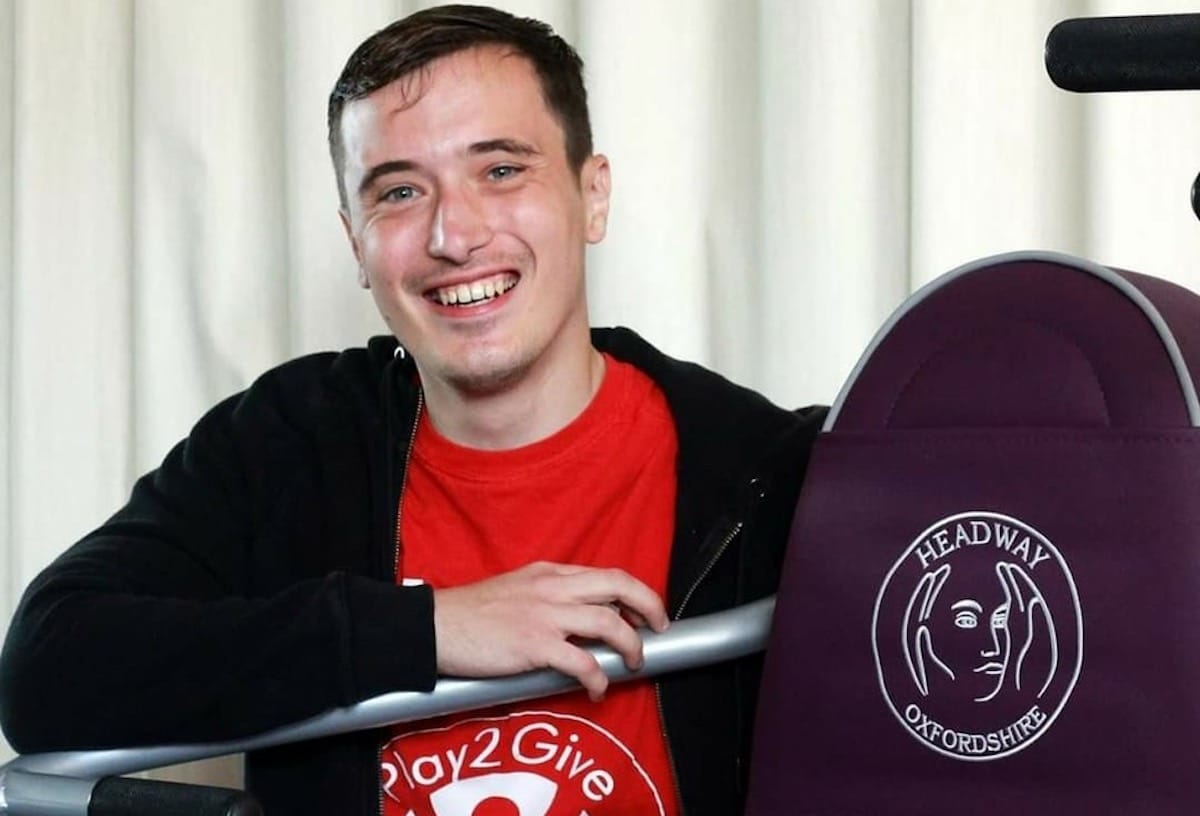
What began as a schoolboy dream to raise a few pounds to thank the medics who had supported him throughout his childhood has become a much-loved fundraising organisation which has generated over £245,000 for good causes. Here, Andrew Baker discusses his pride at being able to help fellow young hospital patients and brain injury survivors through his Play2Give organisation.
Having lived with a brain injury since birth, spending much of his younger years in and out of hospitals for ongoing treatment and undergoing major brain surgery at the age of 12, Andrew Baker decided he wanted to give something back.
“The medical teams were amazing, they were so brilliant, and I decided I just wanted to say thank you. It will be 19 years ago in January when I was in year 10 at St Birinus School in Didcot and thought how nice it would be to raise some money for them as a way to give back,” he recalls.
A global community of therapists has been created to share best practice and knowledge, while enabling new and creative ways of thinking, working and support for clients to be developed using research, insight and experience from around the world.
Remote Rehab was established during the COVID-19 lockdown, during the unexpected and widespread introduction of telerehab when many in-person visits to clients were no longer possible.
The online group was set up as a forum for therapists, experts and researchers around the world to connect, creating an opportunity to share information and knowledge, as well as providing much-needed support to fellow professionals.
The COVID-19 pandemic has forced huge changes within case management and the traditional ways in which clients have been supported. In our continuing series of Q&A features with case managers across the country, Martin Gascoigne of Neuro Case Management UK (NCMUK) shares his experiences.
Can you summarise how the past few months have been for you. The past few months for NCMUK have been extremely challenging. This is due to the Government initially ring fencing all of the PPE supplies for NHS staff which made it very difficult for us to procure the necessary equipment. Also, due to our Paediatric Clients Parents furloughing, we have experienced different challenges with the type and level of care that they felt they would like us to provide whilst still working in accordance with National Minimum Standards.
Having lived with a serious brain injury from the age of seven, Jamie has rebuilt his life and is committed to enjoying every single day, supported by a team of specialists around him. NR Times learns more.
Jamie lives every day to the full.
Having lived with a severe brain injury since the age of seven, when he was involved in a road traffic accident, Jamie has rebuilt his life beyond all expectations.
He has developed a love of boxing, which is helping him progress both physically and emotionally, which has proved the perfect solution to his loves of sport and being active.