


News

Work of six brain and spinal injury specialist law firms highlighted in inaugural NR Times Awards

An augmented-reality (AR) headset is an effective digital tool for improving posture and gait in people with Parkinson’s disease, according to new trial findings.
Voting is now open for the person who has made the biggest impact in the world of neuro-rehab

At the launch of Head Safe Football, Hayley McQueen speaks about how she hopes donating her father Gordon’s brain to medical research, following the football legend’s death earlier this year, will help to provide the evidence to make football a safer sport and to enable families to access the help and support they need.
The family of the late football legend Gordon McQueen have spoken of how they hope his death from football-related dementia - and possible CTE - will help to change the future for others.
Former Manchester United, Leeds United and Scotland footballer McQueen passed away in June, following a battle with vascular dementia which saw him decline rapidly in the latter stages.
His family have donated his brain to research, with eminent neuropathologist Dr Willie Stewart currently carrying out tests to establish whether the much-loved defender actually had Chronic Traumatic Encephalopathy (CTE) - a neurodegenerative disease linked to the cumulative effect of head impacts.
His daughter Hayley McQueen, a well-known broadcaster and SkySports presenter, spoke of her family’s desire to help change the future at the launch of Head Safe Football - a charity committed to eliminating CTE from football through education and awareness to bring about necessary change.

People who had high blood pressure while lying flat on their backs had a higher risk of heart attack, stroke, heart failure or premature death, according to new research. The autonomic nervous system regulates blood pressure in different body positions; however, gravity may cause blood to pool when seated or upright, and the body is [...]

We look back at the Anchor Point knowledge exchange event, which looked at all aspects of family support and intervention after life-changing brain injury, and what more we could and should be doing. By Kirsty Simpson, Sara Rose and Amy Harrison.

Work is underway in the US to improve cholesterol screenings to help reduce cardiovascular disease including stroke, thanks to a new partnership. The American College of Cardiology, is collaborating with Amgen and Esperion, to launch a new quality improvement campaign, Driving Urgency in LDL Screening. Its aim is to increase the rate of diagnostic LDL [...]

 New scheme bridges funding gap to encourage researchers continue the search for a cure to devastating MND
Two ambitious early career researchers with a passion to investigate potential causes and therapies for motor neurone disease (MND) will receive a new type of funding through the MND Association’s new Pre-Fellowship scheme.
The first-of-its-kind Pre-Fellowship scheme for MND is funded by the MND Association and administered by MND Scotland.
Following a rigorous application process, Dr Alannah Mole, of the University of Sheffield, and Dr Emily Carroll, from the University of Oxford, have each been awarded a grant which provides 12-18 months of ‘pump priming’ funds under the scheme that aims to bridge a long-acknowledged funding gap.

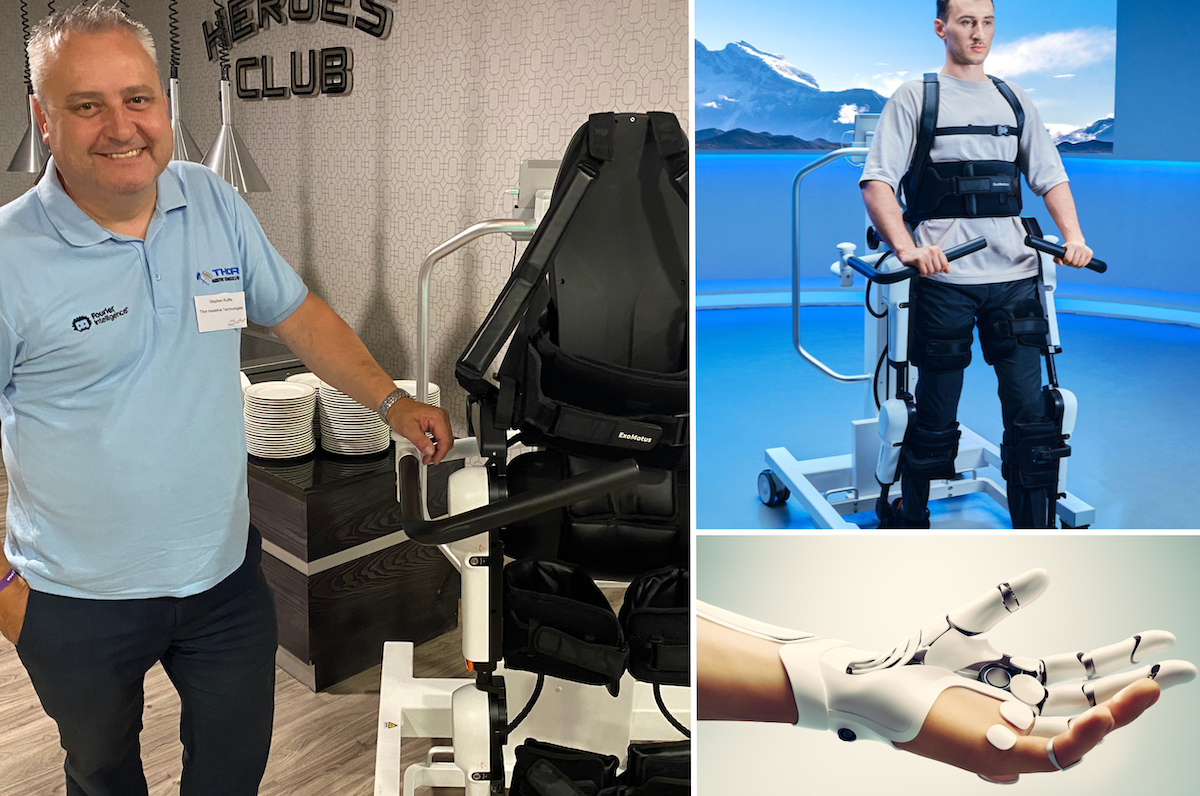
With over 20 years experience in the medical device industry, Stephen Ruffle, commercial director at Thor Assistive Technologies, has been a key player in bringing some of the major breakthroughs of the sector to those who need them most. He sat down with NR Times to share his insights.
Starting out as a wheelchair designer, before becoming a mobility specialist and eventually investigating the emergence of Exoskeleton devices, Stephen Ruffle, has seen some significant technological advances in neurorehabilitation over the last two decades. Over the course of his career, Stephen has introduced a number of new neurorehabilitation devices to the UK from around the world, including the ReWalk 6.0 Personal Exoskeleton in 2015, helping them reach the patients who stand to benefit. He went on to establish Thor Assistive Technologies which trains, supports and supplies its partners with innovative rehabilitation devices, based on using robotics to improve exercise dose, repetitions and engagement - all of which has been proven to help build neuroplasticity and improve overall recovery. Here, Stephen, discusses the important role that these devices have in neurorehab, the major breakthroughs he has seen, and the challenges still to be tackled by the market.
The World Stroke Organisation (WSO) has announced the latest winners of its Future Stroke Leaders Programme; which funds innovators helping to reduce the global burden of stroke. Its assessment committee considered nine project proposals which all incorporated the overall programme objective and were in line with the WSO’s mission, to reduce the global burden of [...]


