



Stroke
Stroke care, recovery and rehabilitation.
 Stroke29 Jul
Using a socially assistive robot (SAR) in post-stroke rehabilitation improves outcomes, according to researchers at Ben-Gurion University of the Negev in Israel. The finding from the first long-term study of robot use in physical therapy could open up a totally new method for rehabilitation exercises. Prof. Shelly Levy-Tzedek is a member of the Department of [...]
 Stroke18 Jul
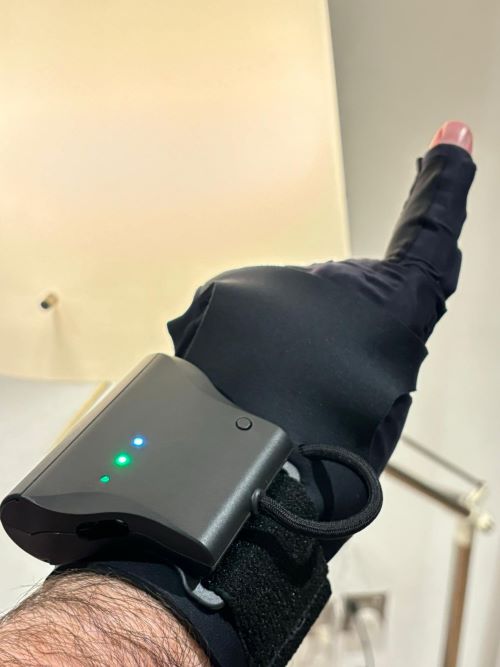
Arts therapies provider Chroma has completed a pilot project using the innovative MiMu gloves. Led and initiated by Daniel Padhila, neurologic music therapist at Chroma, the gloves formed part of upper limb rehabilitation for post-stroke clients at the Wellington Hospital, London. MiMu gloves were developed by a team led by singer-songwriter Imogen Heap, and have [...]
 Stroke2 Jul
University of Cincinnati researchers have pioneered an animal model that sheds light on the role an understudied organ in the brain has in repairing damage caused by stroke. The research, published in the Proceedings of the National Academy of Sciences, sought to learn more about how the adult brain generates new neurons to repair damaged [...]
 Stroke28 Jun
The new SSNAP dataset will bring big changes to the NHS stroke care pathway. As Karen Hurst, stroke data Systems manager at West Suffolk Hospital, explains, the support of an established software system means the therapy teams can embrace new ways of working without data capture for new criteria becoming a distraction. When it lands [...]
 Stroke24 Jun
New research from West Virginia University has shown that American Heart Association and American Stroke Association guidelines are effective at speeding up hospitals’ response times for stroke treatment and can be mastered even by members of “ad hoc” medical teams that assemble rapidly on the fly. Swift stroke treatment is critical, so when a stroke [...]
 Stroke20 Jun
Aphasia is a condition that affects a quarter of stroke survivors. It impairs communication abilities, including speaking, listening, reading, and writing. Aphasia can have a profound impact on social relationships, employment, and overall quality of life. In current UK practice, 90% of speech and language therapists acknowledge the importance of discourse assessment and treatment. However, [...]
 Stroke13 Jun
Low-income Black and Hispanic stroke survivors with uncontrolled hypertension had a more than two-fold reduction in blood pressure when they tracked it at home and sent their readings to a nurse case manager, new research shows. The gains were in systolic blood pressure specifically at one year into the study and when compared to a [...]
 Stroke6 Jun
Higher amounts of sugar substitute xylitol are associated with increased risk of cardiovascular events like heart attack and stroke, a new study from the US has found. The Cleveland Clinic team, led by Stanley Hazen, M.D., Ph.D., confirmed the association in a large-scale patient analysis, preclinical research models and a clinical intervention study. Xylitol is [...]
 Stroke5 Jun
Patients with an intracerebral hemorrhage have better medical outcomes when surgeons perform an early minimally invasive removal of a hematoma compared to those receiving the standard of care, according to a study published in the New England Journal of Medicine. Indiana University School of Medicine faculty clinicians Mitesh Shah, MD, Bradley Bohnstedt, MD, Regg Singh, MD and Jason Allen, MD, PhD are co-authors on a paper that assessed the findings [...]
 Stroke24 May
People who eat more ultra-processed foods like soft drinks, crisps and cookies may have a higher risk of having memory and thinking problems and having a stroke than those who eat fewer processed foods, a new study has found. The study does not prove that eating ultra-processed foods causes memory and thinking problems and stroke [...]


