Study highlights stroke as COVID risk factor

People hospitalised with COVID-19 and neurological problems including stroke, have a higher risk of dying than other COVID-19 patients, a study suggests.

The newly published study looked at data from 4,711 COVID-19 patients who were admitted to hospital during the six-week period between March 1, 2020 and April 16, 2020.
Of those patients, 581 (12 per cent) had neurological problems serious enough to warrant brain imaging.
By |2024-07-04T17:45:50+01:0023 December 2020|News, Stroke|

Global audience for major paediatric conference

Visitors from across the world will join an array of global speakers at a major event in caring for young people with brain injuries.

The fourth National Paediatric Brain Injury Conference, organised by The Children’s Trust - which provides residential and community care for children with neurological injuries and disabilities - is to be held online due to the ongoing impact and implications of COVID-19. And while the pandemic will prevent the Connections and Collaborations being held in person, the decision to take it online means it can attract an audience far beyond its base in Tadworth, Surrey. The event, on February 4, brings together some of the neuro sector’s leading clinical professionals to explore some of the fundamental elements involved in a child’s recovery following an acquired brain injury.
By |2026-02-11T11:42:23+00:0023 December 2020|Inpatient neuro rehab, Care & services, News|

It’ll be lonely this Christmas – but at least I’ll be here to enjoy 2021

For Leanne, who has MS, the opportunity to gather with loved ones on Christmas Day is one she feels she must decline. Here, she shares her reasons for choosing to be lonely this Christmas.

Christmas is my favourite time of year, and ordinarily I’d be out celebrating, seeing friends and family, and planning something really fantastic to see in the new year. But like for so many other people, 2020 is going to be so different. I’ll be completely on my own. And while under normal circumstances that would be the most heartbreaking Christmas I could imagine, this year it is undoubtedly my best option. At least, that way, I’ll still be here to enjoy 2021 and the years beyond that.

Landmark MOU aims to advance rehab tech globally

Technology group Fourier Intelligence has signed a global partnership with a Canadian institution which aims to advance research and development in rehab robotics.

Fourier has signed a Memorandum of Understanding (MOU) with the KITE Research Institute at the Toronto Rehabilitation Institute - University Health Network (UHN). The agreement will enable the expansion of KITE’s robotics research and education capabilities; including through the establishment of a “world-class” rehab robotics centre, underpinned by Fourier’s next-gen RehabHub platform and support from its network of researchers. KITE is a world leader in complex rehabilitation science and is dedicated to improving the lives of people living with the effects of disability, illness and ageing.
By |2024-07-04T17:45:51+01:0023 December 2020|Tech & industry, News|

‘We’ve been enabled to think outside the box’

Case management has faced enormous challenges during the pandemic, which have necessitated big changes from within the profession. Here, in the latest in our Q&A series with case managers from across the country, Jenny Webster from Westcountry Case Management shares her experiences.

Can you summarise how the past few months have been for you. The last few months have been interesting to say the least! We have had to remain up to date with all the changes in government advice, whilst supporting our clients and support workers who are all managing their own lives within the context of the pandemic.
By |2024-07-04T17:45:51+01:0022 December 2020|Case management, News|

‘I’d never imagined using Zoom as part of my physio placement’

Every aspect of neurophysiotherapy has had to adapt with the onset of COVID-19, including how students prepare for a career in the profession. Here, student Tabitha Pridham discusses her experience of a pandemic placement.

Prior to the COVID-19 pandemic, the concept of physiotherapists routinely holding sessions with clients remotely was quite  unlikely. While used to some degree in a small number of practices nationally, telerehab, as it has now become widely known, was not on the agenda of many
By |2024-07-04T17:59:16+01:0021 December 2020|Interviews, Insight, News, Case management|

How AI could detect post-stroke depression

Artificial intelligence could help stroke survivors get the right treatment by detecting a patient’s post-stroke depression type, a Japanese study shows.

The AI was developed by Hiroshima University (HU) researchers using a probabilistic artificial neural network called log-linearized Gaussian mixture network. The neural network was trained to distinguish between depression, apathy, or anxiety based on 36 evaluation indices obtained from functional, physical, and cognitive tests on 274 patients.
By |2024-07-04T17:45:52+01:0018 December 2020|News, Stroke|

Brain stimulation device set to improve depression in stroke survivors

One in three stroke survivors experiences depression within five years of it happening, but a new device could help reduce this by utilising brain stimulation.

A study from the University of South Australia found that using repetitive transcranial magnetic stimulation (rTMS) improved depression among its patients. The researchers delivered around 30,000 electromagnetic pulses to each stroke survivor’s brain over the course of two weeks, which showed positive changes in brain function.
By |2024-07-04T17:45:52+01:0018 December 2020|Research|

‘Next generation’ stroke care adopted in Northern Ireland

A high-tech system which enables the emergency assessment of patients with suspected stroke has now become adopted by the whole of the UK after being approved for use in Northern Ireland.

The telehealth system developed by Hospital Services Limited (HSL) has been hailed as providing “next generation” support to clinicians and consultants in being able to carry out video consultations and diagnosis of patients by smartphone or tablet. HSL’s technology is already in place in hospitals and many GP surgeries in the UK and Ireland, and has now been introduced into Northern Ireland, to bring additional resources to medics and enable vital interventions in time-critical treatments.
By |2026-02-11T11:42:23+00:0018 December 2020|News, Inpatient neuro rehab, Care & services|

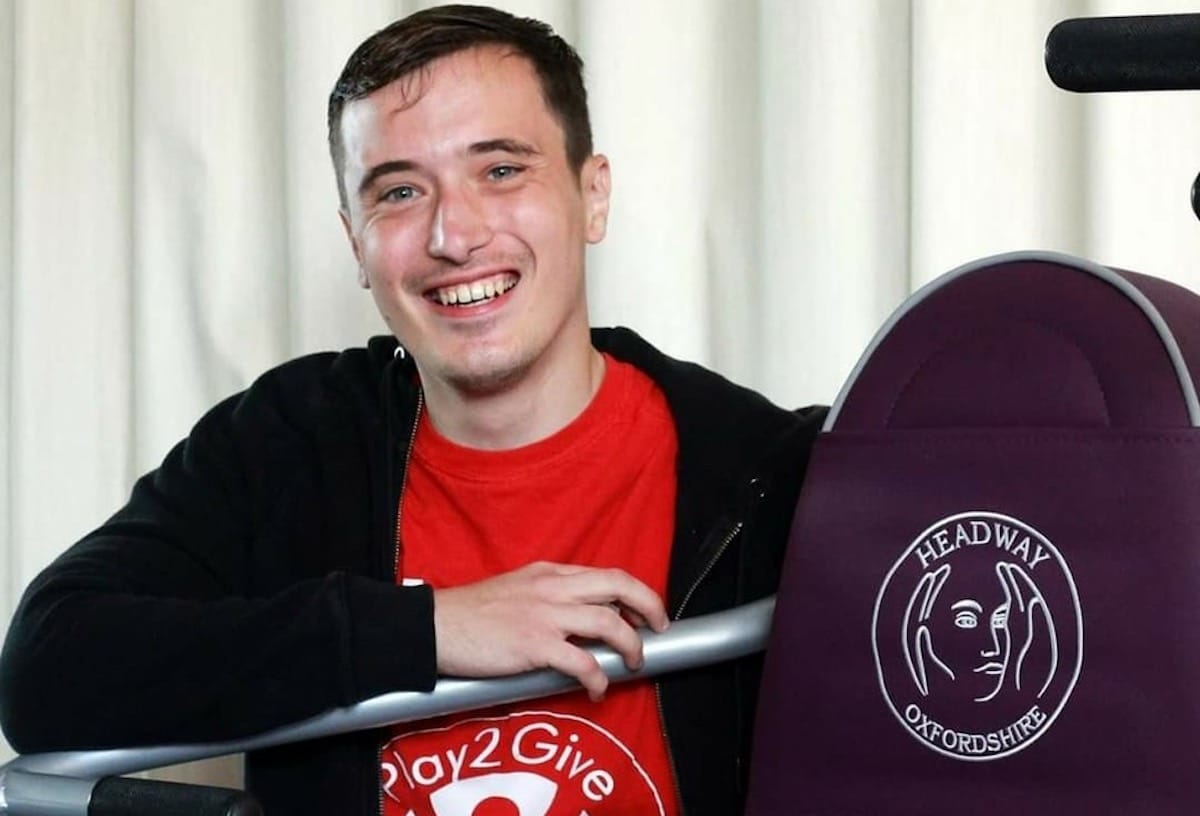
How an appeal to raise a few pounds became a much-loved charity – meet its inspiration, brain injury survivor Andrew Baker

What began as a schoolboy dream to raise a few pounds to thank the medics who had supported him throughout his childhood has become a much-loved fundraising organisation which has generated over £245,000 for good causes. Here, Andrew Baker discusses his pride at being able to help fellow young hospital patients and brain injury survivors through his Play2Give organisation.

Having lived with a brain injury since birth, spending much of his younger years in and out of hospitals for ongoing treatment and undergoing major brain surgery at the age of 12, Andrew Baker decided he wanted to give something back. “The medical teams were amazing, they were so brilliant, and I decided I just wanted to say thank you. It will be 19 years ago in January when I was in year 10 at St Birinus School in Didcot and thought how nice it would be to raise some money for them as a way to give back,” he recalls.
By |2024-07-04T17:45:52+01:0017 December 2020|News, Patient stories|
Go to Top